Supreme Court Orders Retrial in Bhola Mahto Case, Emphasizes Fair Trial and Adequate Representation Court Remands Appeal for Fresh Hearing, Highlights Importance of Convict Notification and Real Legal Aid
In a significant ruling, the Supreme Court of India has set aside the conviction of Bhola Mahto, remanding his appeal for a fresh hearing. The appeal, which had been decided by the High Court of Jharkhand, was returned for reevaluation due to concerns over adequate representation and fair trial protocols. Mahto, initially convicted under Section 302 of the Indian Penal Code (IPC) for murder, had his conviction altered to Section 304 Part II by the High Court, resulting in a reduced sentence of five years.
The Supreme Court, in its judgment, underscored the High Court's genuine intention to expedite justice by appointing an Amicus Curiae in the absence of Mahto's counsel. However, it criticized the lack of communication with Mahto about this appointment, which could have compromised the fairness of the proceedings. The Court emphasized that legal aid should not be a mere formality but must provide real and meaningful assistance to the accused.
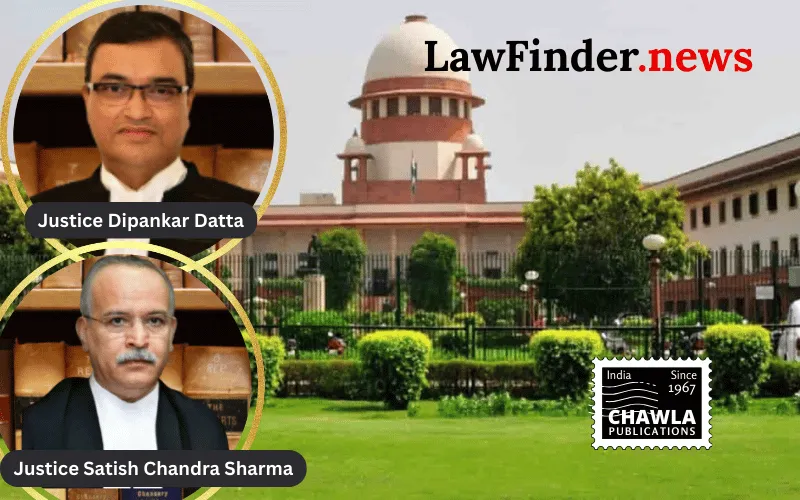
The bench, comprising Justices Dipankar Datta and Satish Chandra Sharma, noted that Mahto had been on bail for over two decades, contributing to the delay in his appeal's hearing. They highlighted the importance of notifying the convict about their counsel's absence and the appointment of an Amicus Curiae to ensure the convict can provide necessary instructions for effective representation.
The Supreme Court also restored Mahto's bail status, instructing his release pending the High Court's decision. The ruling reiterated the need for High Courts to avoid compromising fairness in their efforts to expedite criminal cases. The apex court referenced the decision in "Anokhi Lal v. State of Madhya Pradesh" to stress that expeditious disposal must not come at the expense of fairness and justice.
The judgment has broader implications for the legal system, urging courts to adopt procedures ensuring convicts are adequately informed and represented, especially when their liberty is at stake. The Supreme Court's directives aim to uphold the principles of justice, emphasizing that fairness must remain paramount in the criminal justice process.
Bottom Line:
The Supreme Court emphasized the importance of fair trial and proper representation for convicts during appellate proceedings, especially when an Amicus Curiae is appointed in the absence of the convict's counsel.
Statutory provision(s):
Criminal Procedure Code, 1973 Section 374(2), Indian Penal Code, 1860 Sections 302 and 304 Part II
Bhola Mahto v. State of Jharkhand, (SC) : Law Finder Doc id # 2867875