Delhi High Court Upholds Annulment of Marriage Due to Unproven Customary Divorce The court emphasizes the necessity of cogent evidence to prove customary divorce among the Jat community, invalidating a marriage based on unverified claims.
In a significant judgment, the Delhi High Court has upheld the annulment of a marriage between Smt. Sushma and Sh. Rattan Deep, emphasizing the importance of substantial evidence in claims of customary divorce within the Jat community. The court found that Smt. Sushma’s marriage to Sh. Rattan Deep was void as it violated the conditions laid out in the Hindu Marriage Act, 1955, specifically Section 5(i), due to the lack of evidence supporting her divorce from a previous marriage through customary means.
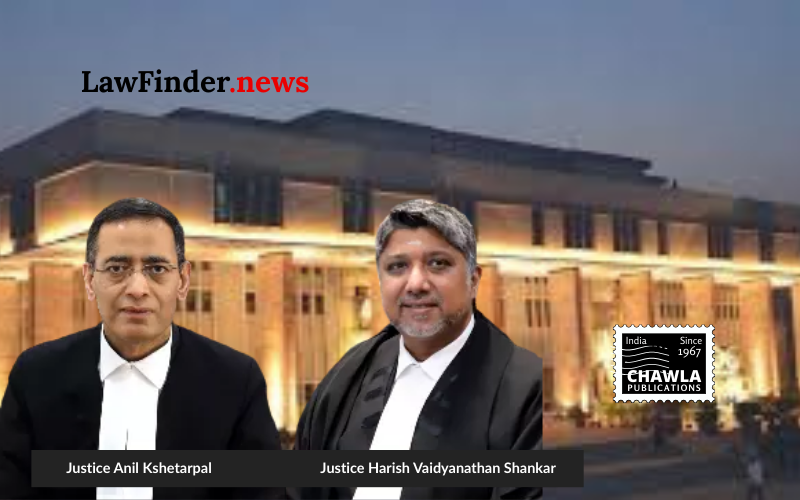
The bench, comprising Justices Anil Kshetarpal and Harish Vaidyanathan Shankar, addressed two primary questions: whether customary divorce is a valid practice in the Jat community, and if such a divorce occurred between the appellant and her previous husband. The court concluded that the appellant failed to provide the required cogent evidence, such as historical texts, past community practices, or judgments recognizing such customs, to substantiate the claim of customary divorce.
The judgment clarified that mere agreements or mutual settlements, such as the one presented by Smt. Sushma, do not meet the legal criteria for proving customary divorce. The court underscored that claims of customary divorce must be backed by clear, historical evidence, and cannot be validated by the testimony of interested parties alone.
Despite the Family Court initially accepting the existence of customary divorce within the community, the High Court overturned this finding, citing a lack of substantial evidence. The court also noted that the appellant failed to examine key witnesses to the alleged divorce deed, further weakening her case.
Additionally, the court reiterated that marriages solemnized in contravention of Section 5 of the Hindu Marriage Act are null and void, not merely voidable, as per Section 11 of the Act. With no evidence of a legitimate divorce from her previous husband, Smt. Sushma's marriage to Sh. Rattan Deep was deemed invalid from the outset.
This ruling underscores the judiciary's stringent standards for proving customary practices that deviate from codified law, reinforcing the necessity for comprehensive evidence in such cases.
Bottom Line:
Customary divorce among the Jat community must be validly proved through cogent evidence, including historical texts, past instances, or judgments recognizing such custom. Mere agreements or mutual settlements do not fulfill the legal requirements for customary divorce.
Statutory provision(s): Hindu Marriage Act, 1955 Sections 5(i), 11, 29; Civil Procedure Code, 1908 Order XLI Rules 22 and 3
Smt. Sushma v. Sh. Rattan Deep, (Delhi)(DB) : Law Finder Doc Id # 2814049