Full Bench Decision Empowers Courts to Grant Waivers Under Exceptional Hardship or Depravity Conditions
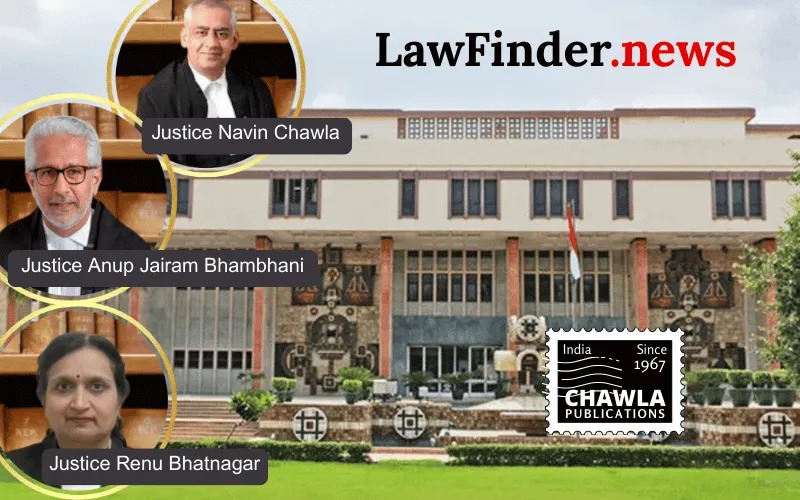
In a significant judgment, the Delhi High Court's Full Bench, comprising Justices Navin Chawla, Anup Jairam Bhambhani, and Renu Bhatnagar, has ruled that the statutory timelines under Sections 13B(1) and 13B(2) of the Hindu Marriage Act, 1955, regarding divorce by mutual consent, can be waived under certain exceptional conditions. This landmark decision provides a legal framework for courts to grant waivers when exceptional hardship or depravity is demonstrated.
The judgment arose from the case of Shiksha Kumari v. Santosh Kumar, where the court was asked to reconsider the interpretation of statutory timelines for mutual consent divorce under Section 13B. The bench affirmed the legal provision that courts have the discretion to waive the one-year separation requirement and the six-month cooling-off period if certain conditions are met.
The court highlighted that the waiver is permissible if it is demonstrated that exceptional hardship or depravity exists, allowing both Family Courts and High Courts to grant such waivers. This decision aligns with the precedent set by the Supreme Court in cases like Amardeep Singh v. Harveen Kaur, which considered the cooling-off period as directory rather than mandatory.
The judgment underscores the importance of judicial discretion and the need for courts to evaluate factors such as the maturity of the spouses, absence of coercion, and the possibility of reconciliation before granting waivers. It emphasizes that waivers should not be granted merely for the asking but require careful judicial scrutiny.
The court's ruling reflects an evolving jurisprudential landscape, recognizing the importance of individual autonomy and dignity in matrimonial relationships. By allowing waivers under specific conditions, the judgment aims to prevent parties from remaining trapped in unworkable marriages and promotes decisional autonomy while safeguarding against impulsive dissolutions.
The decision marks a departure from previous views that treated the timelines as immutable, instead favoring a more flexible approach that considers the unique circumstances of each case. This development is expected to have significant implications for the legal process regarding mutual consent divorce in India.
Bottom Line:
Waiver of statutory timelines under Section 13B(1) and 13B(2) of Hindu Marriage Act, 1955 is permissible under certain conditions; exceptional hardship or depravity must be demonstrated, and both Family Court and High Court have the authority to grant such waivers.
Statutory provision(s): Hindu Marriage Act, 1955 Sections 13B(1), 13B(2), 14(1)
Shiksha Kumari v. Santosh Kumar, (Delhi)(FB) : Law Finder Doc Id # 2822910