In a landmark judgment, the Delhi High Court delineates procedural responsibilities between Magistrates and Sessions Courts, impacting criminal trial processes significantly.
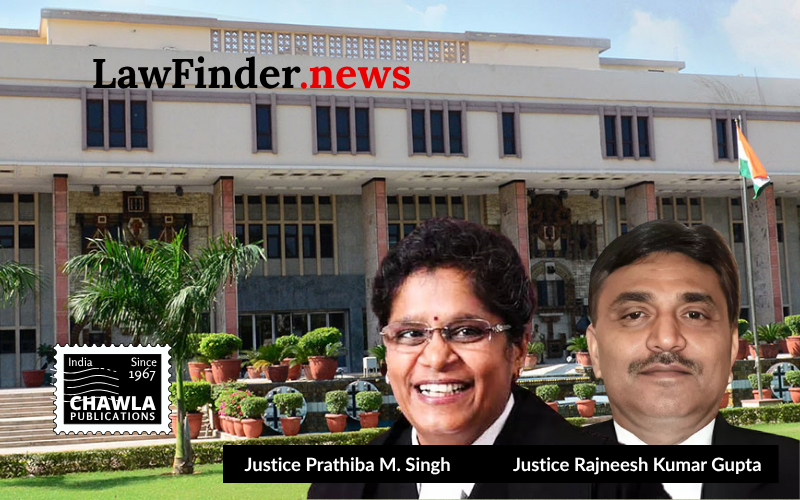
In a significant ruling, the Delhi High Court has addressed key procedural ambiguities surrounding the filing of supplementary chargesheets and the authority to order further investigation in criminal cases. The judgment was delivered by a division bench comprising Justice Prathiba M. Singh and Justice Rajneesh Kumar Gupta, in the case titled Court On Its Own Motion v. State.
The case originated from a criminal reference made by the Metropolitan Magistrate-04, New Delhi District, Patiala House Court, concerning procedural discrepancies observed in the case of State v. Dev Raj Nagar. The questions posed were critical: First, upon committal of a case, should supplementary chargesheets be filed before an Ilaqa Magistrate or the Court of Session? Second, who holds the power to order further investigation post-committal, an Ilaqa Magistrate or the Court of Session?
The High Court's judgment, dated October 29, 2025, provides clarity on these procedural uncertainties. It asserts that supplementary chargesheets should be filed before the concerned Magistrate, who retains jurisdiction to complete procedural formalities, take cognizance, if necessary, and then commit the case to the Court of Session. This decision underscores the Magistrate's continuing role in handling procedural aspects even after the initial committal to the Sessions Court.
On the matter of further investigation, the judgment unequivocally states that post-committal, the Court of Session assumes the repository of power to order further investigation. This aligns with the hierarchical structure within the criminal justice system, where the Court of Session, having original jurisdiction post-committal, is better positioned to make determinations regarding further investigative needs.
The judgment also reflects on the impact of the Bharatiya Nagarik Suraksha Sanhita, 2023, which corresponds to provisions in the Criminal Procedure Code, specifically addressing further investigation during trial. With the enactment of BNSS, the Court of Session now explicitly holds the authority to permit further investigation during trials, reinforcing the procedural framework established by the High Court's decision.
The ruling references a multitude of precedents, including Supreme Court judgments, to substantiate its conclusions. It emphasizes the need for clarity and uniformity in procedural practices across judicial forums in Delhi, addressing existing inconsistencies and ensuring streamlined processes in criminal trials.
This judgment is poised to have a profound impact on the administration of criminal justice, ensuring that procedural ambiguities are resolved and judicial responsibilities are clearly delineated, promoting efficiency and fairness in legal proceedings.
Bottom Line:
Supplementary chargesheet under Section 173(2) and 173(8) CrPC must be filed before the concerned Magistrate, who shall complete procedural formalities, take cognizance, if required, and then commit the case to the Court of Session.
Statutory provision(s): Section 173(2), Section 173(8), Section 193, Section 190 of the Criminal Procedure Code, 1973; Section 193(9) of Bharatiya Nagarik Suraksha Sanhita, 2023.
Court On Its Own Motion v. State, (Delhi)(DB) : Law Finder Doc Id # 2803050