Court affirms hierarchy in judicial review; ensures justice for judicial officers by expunging unwarranted remarks without affecting their integrity.
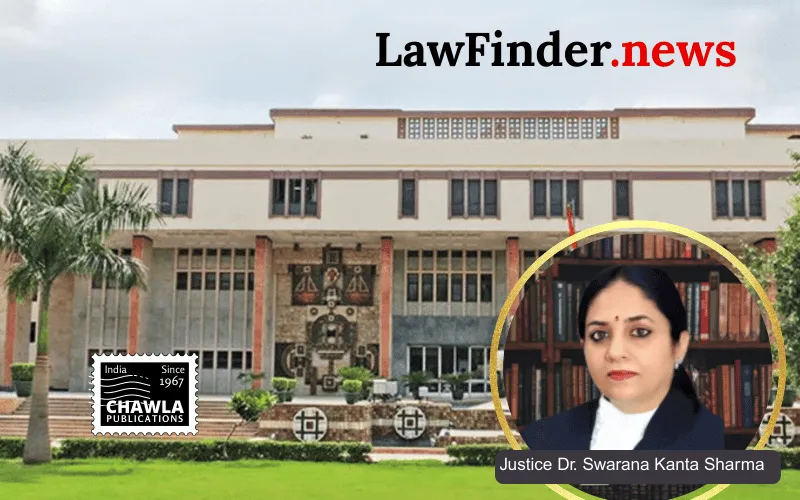
In a significant judgment, the Delhi High Court, presided over by Dr. Swarana Kanta Sharma, J., addressed the hierarchical scrutiny of judicial orders and clarified the expungement of adverse remarks against judicial officers. The judgment, delivered on March 11, 2026, in the case of Sanjay Kumar Sain v. State of NCT of Delhi, reinforces the integrity of the judicial review process while ensuring the personal competence and integrity of judicial officers remain untarnished in the absence of express adverse comments.
The case stemmed from a petition filed by Sanjay Kumar Sain, seeking recall of a prior judgment dated March 1, 2023, which contained remarks against him made by an Additional Sessions Judge in relation to the handling of a case involving delays in forensic report submissions. The High Court previously concluded that delays were primarily due to the Forensic Science Laboratory (FSL) and not the fault of the police officials, leading to the expungement of adverse remarks against them.
The recall applicant, a serving judicial officer, argued that the judgment was passed without due notice or opportunity for hearing, violating principles of natural justice. The High Court acknowledged these procedural lapses but emphasized that judicial observations should remain focused on legal errors rather than personal attributes of judicial officers.
The Court clarified that expunging remarks does not imply criticism of the judicial officer's competence or integrity. It was noted that the applicant's strict approach was driven by concerns over delays in trial proceedings, particularly when the accused had been in custody for an extended period.
In a broader context, the Court highlighted the essential nature of hierarchical scrutiny within the judicial system, where higher courts evaluate orders for legality and correctness. This process does not inherently reflect on a judicial officer's capabilities unless specific adverse remarks are made.
Furthermore, the judgment addressed the administrative issue of circulating judgments with the names of judicial officers, which the Court found could lead to unnecessary discomfort. Directions were issued to refer to court numbers or designations instead of individual names in such communications.
The judgment has been welcomed as a reaffirmation of judicial integrity and procedural justice, ensuring that judicial officers are protected from undue criticism while maintaining accountability within the system.
Bottom Line:
Judicial observations and hierarchical scrutiny of orders by higher courts - Remarks made by higher courts in the context of assessing the legality and correctness of orders passed by lower courts do not imply personal criticism of the competence, integrity, or conduct of the judicial officer unless expressly stated.
Statutory provision(s):
- Rule 13 of the Delhi Police (Punishment and Appeal) Rules, 1980
- Article 227 of the Constitution of India
- Section 7 of the Delhi High Court Act, 1966
Sanjay Kumar Sain v. State of NCT of Delhi, (Delhi) : Law Finder Doc id # 2865685