Court Emphasizes the Need for Judicial Findings on Copyright Claims Before Content Take-Down
In a significant judgment, the Delhi High Court has dismissed a petition by the Digital IP Brand Protection Alliance seeking directives for intermediaries to take down content allegedly infringing copyrighted material without a court finding. The petitioner, representing a group of creators, had sought enforcement of compliance under the Information Technology (Intermediary Guidelines and Digital Media Ethics Code) Rules, 2021.
The case, titled "Digital IP Brand Protection Alliance v. Union of India," revolved around allegations of unauthorized copying, distribution, and commercial exploitation of copyrighted content by various intermediary platforms, including Telegram Messenger LLP, Google LLC [YouTube], Meta Platforms Inc., and others. The petitioner argued that these platforms were not adhering to their obligations under the Information Technology Act, 2000 and the accompanying 2021 Rules, specifically under Rule 3(2) and Rule 4.
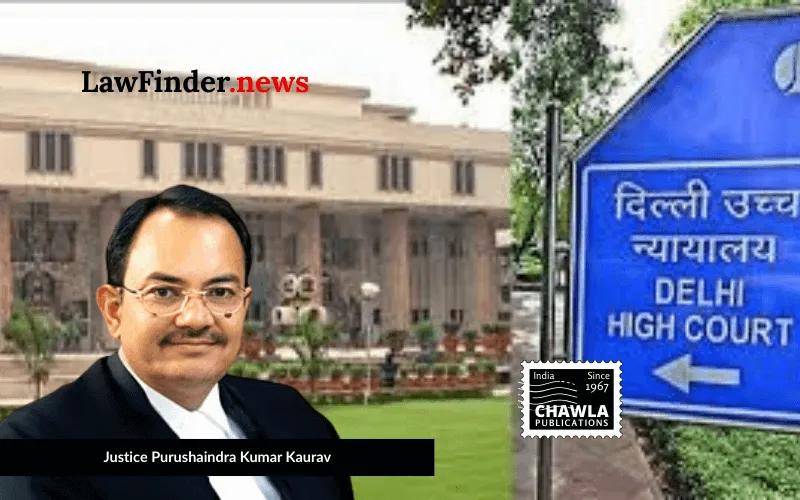
Justice Purushaindra Kumar Kaurav, presiding over the matter, ruled that intermediaries cannot be directed to take down or block content without a judicial finding confirming that the content in question is indeed copyrighted and that the prerequisites for an injunction are satisfied. The judgment underscores the necessity of establishing copyright ownership and meeting injunction requirements before intermediaries can be compelled to remove content.
The court noted that the petitioner had received generic responses to their complaints from the intermediaries, indicating a review of the content but no effective compliance. However, the court maintained that the petitioner could not use the compliance framework as a means to seek an injunction without first proving their copyright claims in court.
Ultimately, the petitioner opted to withdraw the writ petition, with the court granting them the liberty to pursue appropriate legal steps in accordance with the law. This decision highlights the complexities surrounding copyright enforcement in the digital age and the legal standards that must be met to protect intellectual property rights effectively.
Bottom line:-
Compliance under Information Technology (Intermediary Guidelines and Digital Media Ethics Code) Rules, 2021 - Petitioner cannot seek an injunction under the garb of ensuring compliance with due diligence requirements. A court finding is necessary to establish that the content is copyrighted and fulfills prerequisites of an injunction before directing intermediaries to take down or block content.
Statutory provision(s): Information Technology Act, 2000, Information Technology (Intermediary Guidelines and Digital Media Ethics Code) Rules, 2021 - Rules 3(2), 4(1), 4(2), and 4(4).
Digital IP Brand Protection Alliance v. Union of India, (Delhi) : Law Finder Doc id # 2891892