Writ petition challenging polling arrangements for Bar Council of Delhi elections redirected for expeditious consideration by a specially constituted committee.
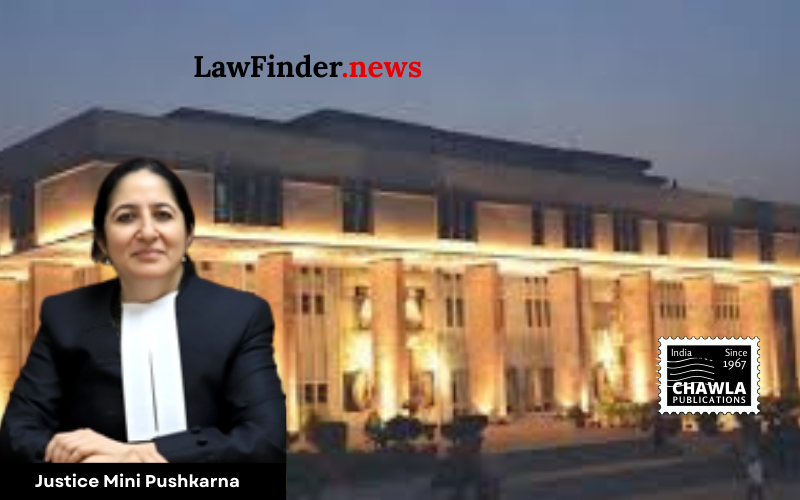
In a significant development regarding the upcoming elections of the Bar Council of Delhi, the Delhi High Court, presided over by Justice Mini Pushkarna, has directed that a writ petition challenging the current polling arrangements be treated as a representation to the Special Committee constituted under Section 8A of the Advocates Act, 1961. This directive comes as an attempt to address the concerns raised about the logistics of polling in the elections scheduled for February 2026.
The petitioner, Surendar Kumar, sought directions to establish polling booths at various District Courts across Delhi to accommodate the large voter base of over 1,05,000 advocates, which has previously led to overcrowding and logistical challenges at the Delhi High Court premises. The petition argued for the feasibility and practicality of using District Courts, which are better equipped to handle such large gatherings, thus ensuring a smoother and more transparent election process.
The Supreme Court, in an earlier order dated 24th September 2025, had mandated the completion of State Bar Council elections by 31st January 2026. However, the Bar Council of Delhi set the polling dates for 13th and 14th February 2026, prompting the petition due to concerns over election management and fairness.
In response to the petition, the Delhi High Court emphasized that the Supreme Court had already established a Special Committee to oversee the elections in Delhi. This committee, chaired by Additional Solicitor General Chetan Sharma, is tasked with supervising all election-related activities and addressing any grievances. The Court, therefore, deemed it appropriate to redirect the petition to this Special Committee for consideration.
The Supreme Court's earlier directions also highlighted the formation of High-Powered Election Committees and a Supervisory Committee to ensure fair and transparent elections across various State Bar Councils. These committees are responsible for addressing grievances and ensuring that the election processes adhere to the prescribed timelines and standards.
The Delhi High Court has instructed the Special Committee to expedite the consideration of the petitioner's representation and issue a decision within three weeks. This move underscores the judiciary's commitment to facilitating a fair electoral process while respecting the established frameworks for election supervision.
Bottom Line:
Writ Petition challenging arrangements for polling in Bar Council of Delhi elections disposed of with directions to treat it as a representation to the Special Committee constituted under Section 8A of the Advocates Act, 1961, and consider it expeditiously.
Statutory provision(s): Advocates Act, 1961 Section 8A, Supreme Court Directions on Election Supervision.
Surendar Kumar v. Bar Council Of Delhi, (Delhi) : Law Finder Doc Id # 2819462



