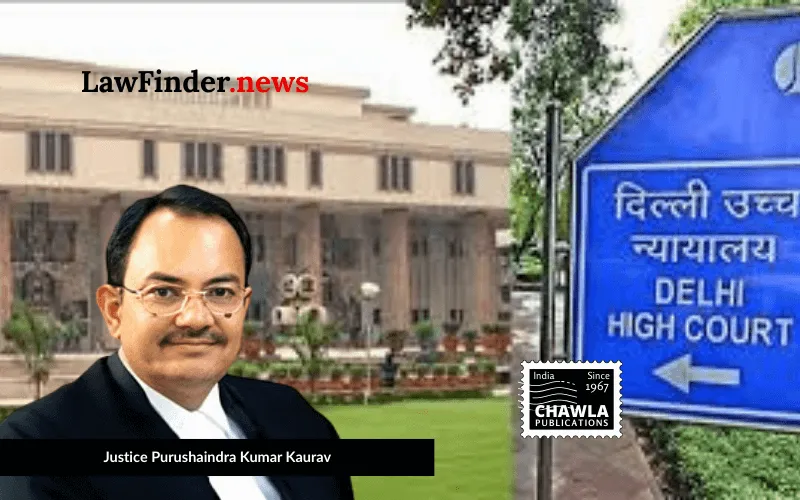
High Court Sets Aside Rehearing Order, Reaffirming Timely Pronouncement of Reserved Judgments
In a significant ruling, the Delhi High Court has directed the transfer of a high-profile case under the Maharashtra Control of Organised Crime Act, 1999 (MCOCA) back to the predecessor judge for the pronouncement of judgment, setting aside an order for rehearing of final arguments by a successor judge. The case, involving Parvesh Mann @ Sagar Mann, was reserved for judgment in July 2025, but the pronouncement was delayed due to procedural issues and a judicial transfer.
The petitioner, Parvesh Mann, approached the High Court seeking a transfer of the case for judgment pronouncement by the predecessor judge, citing administrative orders mandating such pronouncements post-transfer. The High Court, presided over by Dr. Swarana Kanta Sharma, emphasized the statutory and administrative mandates for timely pronouncement of judgments.
The court observed that the predecessor judge was prepared to announce the judgment on November 7, 2025, but deferred due to the absence of the accused in person, as they appeared via video conferencing. Subsequent orders for rehearing by the successor judge were deemed unjustified, with the court highlighting the undue delay and prejudice caused to the accused due to the procedural lapses.
The High Court's decision underscores the importance of adhering to procedural fairness and timely justice, especially in criminal cases involving prolonged judicial custody. The court reinforced the obligation of judicial officers to pronounce judgments within stipulated timeframes, as per administrative directions issued by the Chief Justice.
The case is now set to return to the predecessor judge, with a directive to pronounce the judgment within two to three weeks, ensuring compliance with the administrative orders. The High Court's ruling serves as a crucial reminder of the judiciary's role in upholding the principles of speedy and fair justice.
Bottom Line:
Transfer of case for pronouncement of judgment - Predecessor Judge who reserved judgment is duty-bound to pronounce the judgment even after transfer as per the administrative directions of the Court - Directions for rehearing of final arguments by Successor Judge set aside.
Statutory provision(s): Maharashtra Control of Organised Crime Act, 1999 Sections 3, 4; Criminal Procedure Code, 1973 Section 353
Parvesh Mann @ Sagar Mann v. State NCT of Delhi, (Delhi) : Law Finder Doc Id # 2833639