Court affirms Bar Associations as private entities, not subject to writs of Mandamus; Advocate advised to pursue criminal law remedies.
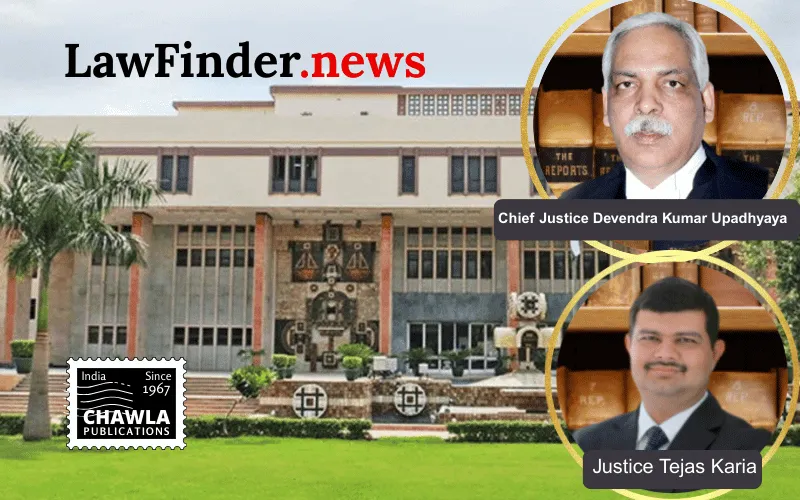
In a significant ruling, the Delhi High Court dismissed an appeal filed by Advocate Sangita Rai against the New Delhi Bar Association and others, reinforcing the status of Bar Associations as private entities not subject to writs of Mandamus under the Indian Constitution. The division bench comprising Chief Justice Devendra Kumar Upadhyaya and Justice Tejas Karia upheld the earlier decision by a Single Judge, emphasizing the private nature of Bar Associations and advising the appellant to seek remedies under criminal law for her grievances.
The case stemmed from an incident where Advocate Rai claimed her Chamber No. 279A at Patiala House Courts was unlawfully occupied, and her belongings were forcibly removed. Rai sought judicial intervention to regain possession and to direct the Bar Association to take action against fellow Advocates involved in the alleged criminal trespass.
The Court reiterated that Bar Associations, registered under the Societies Registration Act, 1860, primarily serve the welfare of their members and do not perform public functions, thus excluding them from the definition of 'State' under Article 12 of the Constitution. Consequently, the Court stated that a writ of Mandamus could not be issued against the Bar Association.
Further, the Court noted that the appellant had not exhausted the available remedies under criminal law, as outlined in the Code of Criminal Procedure, for the alleged acts of trespass. The judges referenced Supreme Court judgments in Sakiri Vasu v. State of U.P. and Priyanka Srivastava v. State of U.P., highlighting the procedural routes available for pursuing criminal complaints.
Moreover, the Court observed that the Bar Council of Delhi, a statutory body responsible for regulating the conduct of Advocates, was the appropriate authority for addressing grievances against lawyers. The appellant had failed to approach the Bar Council before seeking judicial intervention, leading to the dismissal of her plea.
The judgment underscores the importance of following procedural mandates and exhausting statutory remedies before invoking the writ jurisdiction of the Court. While dismissing the appeal, the bench affirmed that the appellant retains the right to pursue civil or criminal actions through competent authorities or courts.
The decision serves as a reaffirmation of the legal framework governing Bar Associations and the procedural requisites for seeking judicial redressal in matters involving private entities.
Bottom Line:
Bar Associations are private entities and not 'State' or its instrumentality under Article 12 of the Constitution; no Mandamus can be issued to them under Article 226 to direct actions against individual lawyers.
Statutory provision(s): Article 12, Article 226 of the Constitution of India, Societies Registration Act, 1860, Code of Criminal Procedure
Sangita Rai v. New Delhi Bar Association, (Delhi)(DB) : Law Finder Doc id # 2840089