Court rules 'Forest' as a generic term, denies injunction to Mountain Valley Springs against Baby Forest Ayurveda over 'deceptively similar' marks.
In a significant ruling, the Delhi High Court has dismissed the appeal filed by Mountain Valley Springs India Private Limited, seeking an interim injunction against Baby Forest Ayurveda Private Limited. The appellant, Mountain Valley Springs, had claimed that Baby Forest’s use of the trademarks 'BABY FOREST' and 'BABY FOREST-SOHAM OF AYURVEDA' infringed upon their registered mark 'FOREST ESSENTIALS.' The Court, however, found that the term 'Forest' was generic and that the marks in question were not deceptively similar.
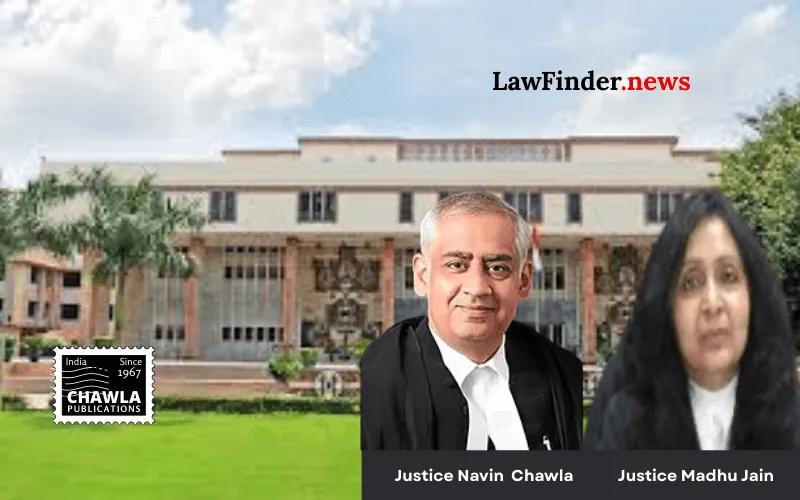
The bench, comprising Justices Navin Chawla and Madhu Jain, emphasized the application of the anti-dissection rule, which considers trademarks as a whole rather than dissecting them into individual components. The Court observed that the appellant's trademark 'Forest Essentials' and the respondent's 'Baby Forest' were distinct in their composite forms.
Mountain Valley Springs argued that their mark 'Forest Essentials' had a well-established reputation and goodwill, with continuous use since 2000 and substantial annual sales. They claimed that Baby Forest's marks were deceptively similar and likely to cause confusion among consumers. However, the Court rejected this argument, noting that the appellant could not claim monopoly over the word 'Forest,' as it is a generic term.
The Court also considered the evidence presented by Mountain Valley Springs, including instances of actual confusion among consumers. However, it held that such evidence must be tested at trial, and the alleged confusion was not sufficient to warrant an interim injunction.
In its decision, the Court cited previous judgments and legal principles governing trademark disputes. It reiterated that in cases of passing off, the plaintiff must prove the existence of goodwill and a likelihood of confusion. The Court also noted that the balance of convenience did not favor granting an injunction, as the appellant failed to demonstrate irreparable harm.
The Delhi High Court's decision underscores the importance of the anti-dissection rule and the need for stringent evidence when claiming exclusivity over generic terms in trademark disputes. The ruling serves as a reminder that trademark protection requires a careful balance between proprietary rights and preventing monopolies over common language terms.
Bottom Line:
Trade Marks Act, 1999 - Application of anti-dissection rule and dominant feature test in evaluating deceptively similar marks - Prima facie rejection of injunction in a passing off and infringement case.
Statutory provision(s):
Trade Marks Act, 1999 Sections 29, 17; Code of Civil Procedure, 1908 Order XXXIX Rules 1 and 2.