The court finds absence of consensus ad idem between the parties, making invocation of Section 9 of the Arbitration and Conciliation Act, 1996 untenable.
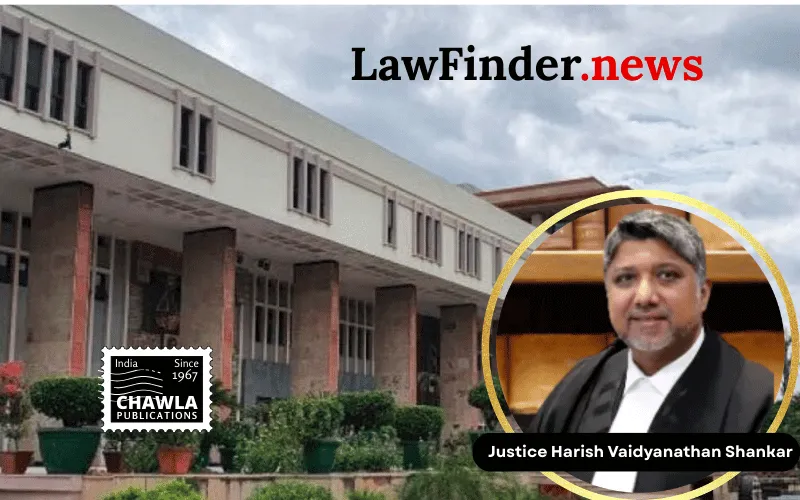
In a significant ruling, the Delhi High Court has dismissed a petition filed by Midpoint Commodeal Private Limited under Section 9 of the Arbitration and Conciliation Act, 1996, seeking interim measures against Fidatocity Homes Private Limited and others. The court, presided over by Justice Harish Vaidyanathan Shankar, concluded that the foundational requirement for invoking Section 9, a valid arbitration agreement, was absent between the parties.
The petitioner, Midpoint Commodeal, had approached the court with claims of unsecured loans and share acquisition payments totaling Rs. 15.30 crore made to the respondents, with the expectation of a binding arbitration agreement to resolve disputes. However, the court meticulously examined the evidence presented and determined that mere exchanges of draft agreements, WhatsApp communications, and financial transactions do not constitute a legally binding arbitration agreement as per Section 7 of the Arbitration and Conciliation Act, 1996.
Justice Shankar emphasized the necessity of mutual and unequivocal consent for a binding arbitration agreement, reiterating that consensus ad idem is a prerequisite for any enforceable contract. The court found that the negotiations between the parties were ongoing and had not culminated in finalized agreements, thereby lacking the necessary clarity and finality required for legal recognition. Despite the petitioner's arguments that the draft Shareholders' Agreement containing an arbitration clause should be enforceable independently, the court held that without a concluded agreement, the arbitration clause could not be separated and enforced.
The judgment also discussed the separability of arbitration clauses from main contracts, clarifying that enforceability hinges on the consent of the parties involved. In this case, the draft agreements never reached execution or finalization, leaving the arbitration clause unenforceable.
The decision underscores the importance of a clearly established arbitration agreement before seeking legal recourse under Section 9 for interim measures. The court's ruling reiterates the principle that mere negotiations or draft agreements without express mutual assent do not satisfy the statutory requirements for invoking arbitration proceedings.
While dismissing the petition, the court clarified that it expressed no opinion on the merits of the monetary or civil claims between the parties, leaving the petitioner at liberty to pursue other legal remedies available.
Bottom line:-
Arbitration Clause - Merely exchanging draft agreements or participating in negotiations does not constitute a concluded arbitration agreement unless there is a clear consensus ad idem between the parties on the arbitration clause.
Statutory provision(s): Arbitration and Conciliation Act, 1996 Sections 9, 7; Indian Contract Act, 1872 Sections 2, 10, 13.