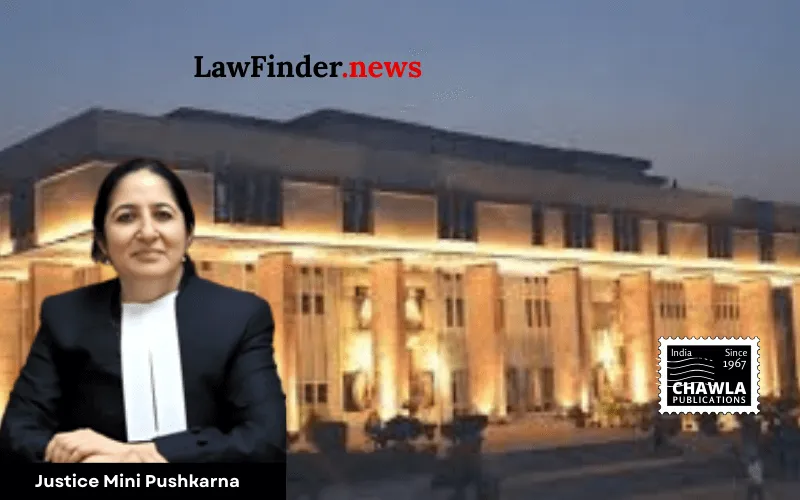
Court Holds Writ Petition Not Maintainable for Election Disputes of Bar Associations; Advises Civil Suit for Contesting Election Results
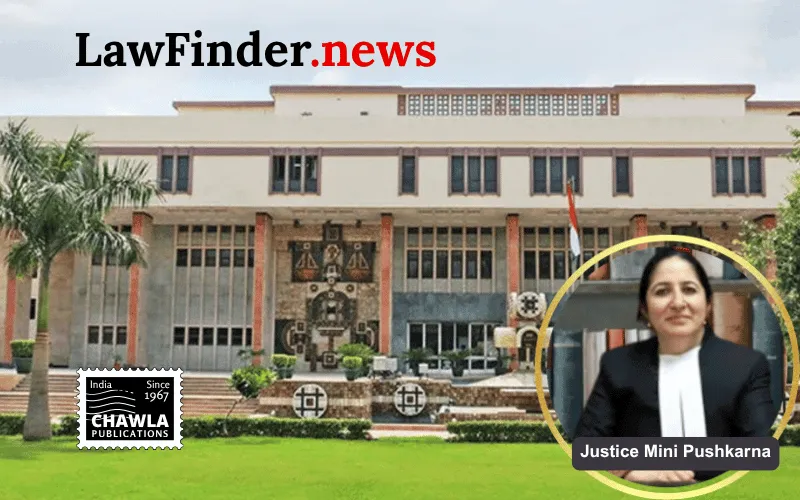
In a significant judgment delivered on January 5, 2026, the Delhi High Court, presided over by Justice Mini Pushkarna, dismissed the writ petition challenging the 2025 New Delhi Bar Association (NDBA) election results declared on March 22, 2025. The petitioners, who were unsuccessful candidates in the NDBA elections conducted at Patiala House Courts, had alleged large-scale rigging and violations in the election process, contending that the election was not free and fair and sought to quash the declared results and order fresh elections.
The petitioners primarily raised concerns that during the election on March 21, 2025, certain supporters of candidates illegally entered the polling station without valid proximity cards, disabled proximity card scanning machines, and cast bogus votes. They argued that there was a substantial discrepancy between the number of votes cast (2034) and the number of proximity cards scanned (allegedly 1850), indicating rigging and violation of the High Court’s earlier full bench judgment in Lalit Sharma v. Union of India (2024), which mandated use of proximity cards for voting in Bar Association elections to ensure fairness and transparency.
The NDBA Returning Officer (RO), respondents, and the Delhi High Court Registrar General countered these allegations, submitting that the elections were conducted with strict adherence to multi-layer verification processes including physical verification of proximity cards alongside scanning, and only voters holding valid proximity cards were permitted to vote. The RO clarified that the scanning machines were operated by a private agency and any malfunction did not compromise the election’s integrity due to the manual verification system. Further, the RO denied any extension of polling time beyond the stipulated hours and maintained that the election result was declared in accordance with procedural norms.
The Court extensively examined the maintainability of the writ petition under Article 226 of the Constitution of India, noting the settled legal position that election disputes involving questions of fact are not ordinarily entertained by writ courts but require adjudication through election petitions or civil suits. The Court relied on precedent including Supreme Court rulings in N.P. Ponnuswami v. Returning Officer (1952), Mohinder Singh Gill v. Chief Election Commissioner (1978), and various High Court judgments to underscore that interference in election matters during or immediately after the election process is limited to exceptional circumstances, and the proper forum for challenging election results of associations like NDBA is a civil court or election tribunal if provided.
Importantly, the Court distinguished between Bar Associations performing public functions and the nature of disputes raised. While acknowledging that Bar Associations can discharge public functions and be amenable to writ jurisdiction in some contexts (citing P.K. Dash v. Bar Council of Delhi, 2016), the Court held that a pure election dispute challenging the result on grounds of alleged rigging does not possess a public character and thus does not warrant writ jurisdiction. The Court further clarified that the role of the Delhi High Court in the elections was limited to issuing proximity cards, while the conduct and supervision of elections rested with the appointed Returning Officers.
Addressing the specific contention about the scanning of proximity cards, the Court held that the mandate in the Lalit Sharma full bench judgment required possession and verification of proximity cards but did not make scanning mandatory as the sole method. The multi-layer physical verification employed by the RO fulfilled the Court’s directions. No evidence was found to support the claim of bogus votes or unauthorized voting.
The Court dismissed the writ petition for lack of maintainability and absence of merit but granted liberty to the petitioners to pursue their grievances through civil proceedings. The Court also directed the preservation of all election-related records, including declaration forms and electronic data, under the custody of the Registrar of the Delhi High Court for any future legal proceedings.
This judgment reiterates the principle that election disputes of private bodies like Bar Associations should be resolved through appropriate statutory or civil remedies and not through writ petitions, thereby emphasizing judicial restraint in interfering with electoral processes except in extraordinary circumstances.
Bottom Line:
Writ petition challenging election results of New Delhi Bar Association (NDBA) on grounds of irregularities and bogus voting is not maintainable; election disputes involving disputed questions of fact are to be agitated through election petition or civil suit, not writ petition; Bar Associations are private bodies and their elections do not ordinarily attract writ jurisdiction unless public function or statutory duty is involved.
Statutory provision(s): Article 226 of the Constitution of India, Article 12 of the Constitution of India, Section 9 of the Code of Civil Procedure, 1908, Articles 329(b) and 243(zg) of the Constitution of India, Advocates Act, 1961, Societies Registration Act, 1860
Vipin Kumar Sharma v. Returning Officer NDBA Elections, 2025, (Delhi) : Law Finder Doc Id # 2833289