Court Declares Election Disputes Non-Arbitrable, Emphasizes Internal Mechanisms
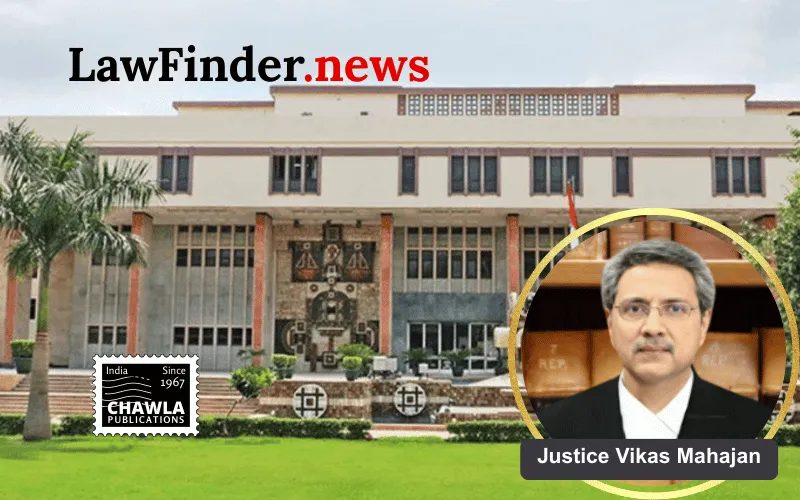
In a significant ruling, the Delhi High Court has dismissed a petition filed by Nathu Ram Jain seeking arbitration concerning the election process of office bearers within the Akhil Bhartiya Agrawal Sammelan, a registered society. The judgment, delivered by Justice Vikas Mahajan, underscored the non-arbitrable nature of election disputes, affecting collective rights and requiring centralized adjudication.
The petitioner, Nathu Ram Jain, had challenged the election notification dated March 16, 2026, alleging violations of the society's constitution and rules in the conduct of the upcoming elections scheduled for April 25, 2026. Jain sought the appointment of a sole arbitrator under Section 11(6) of the Arbitration and Conciliation Act, 1996, based on Clause 43 of the society's constitution which provides for arbitration in disputes between members and the society.
Justice Mahajan, in his judgment, clarified that Clause 43 does not encompass election disputes. He emphasized that such disputes involve actions in rem, impacting the democratic rights of the entire electorate, and thus are outside the purview of private arbitration mechanisms. The court highlighted the presence of an alternative internal mechanism within the society's constitution, specifically Clause 19, which establishes a three-member tribunal for resolving election-related grievances.
The judgment also addressed the issue of judicial interference in ongoing election processes, urging courts to exercise restraint and avoid orders that could stall or interfere with elections. The petitioner, having participated in the election process by filing his nomination, was deemed to have acquiesced to the process, further diminishing his grounds for judicial intervention.
The court cited several precedents, including Booz Allen & Hamilton Inc. v. SBI Home Finance Limited, Vidya Drolia v. Durga Trading Corporation, and decisions from the Madras High Court, reinforcing the principle that election disputes, being actions in rem, are not suitable for arbitration.
In conclusion, the Delhi High Court's ruling underscores the importance of adhering to internal mechanisms for resolving election disputes within societies, highlighting the non-arbitrable nature of such matters. The petition and accompanying application for interim relief were both dismissed, reinforcing the principle of non-interference in ongoing election processes.
Bottom line:-
Disputes pertaining to election processes within a society, involving approximately 1,20,000 members, are inherently non-arbitrable, as they concern collective rights and are actions in rem, not actions in personam. Such disputes are outside the purview of arbitration clauses and are to be addressed through alternative mechanisms stipulated in the society's Constitution or bye-laws.
Statutory provision(s): Arbitration and Conciliation Act, 1996 Section 11(6), Societies Registration Act 1860.
Nathu Ram Jain v. Akhil Bhartiya Agrawal Sammelan, (Delhi) : Law Finder Doc id # 2889186