Court advises petitioners to seek alternative remedies in private law disputes involving cryptocurrency exchanges
In a significant ruling, the Delhi High Court has dismissed a writ petition filed by Aditya Malhotra and others seeking a Central Bureau of Investigation (CBI) probe and compensation related to alleged financial fraud and mismanagement by cryptocurrency exchange BitBNS. The petitioners had invoked Article 226 of the Constitution of India, seeking multiple reliefs, including regulatory measures for cryptocurrency exchanges and the release of funds allegedly held by BitBNS.
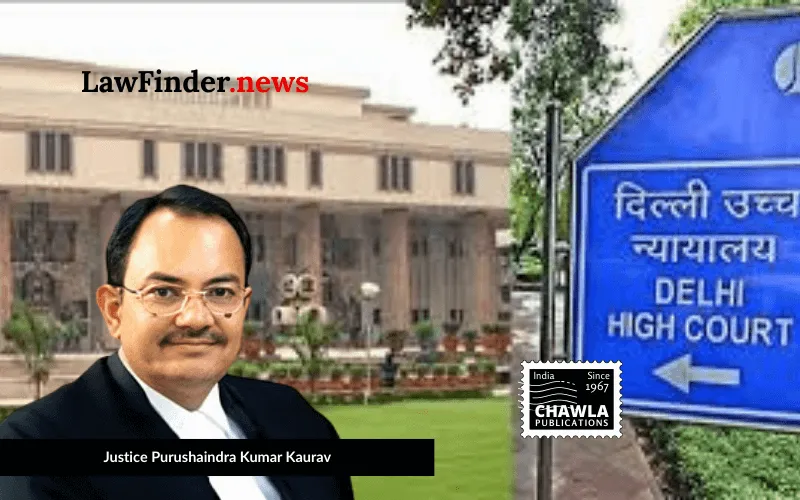
The bench, presided over by Justice Purushaindra Kumar Kaurav, underscored the principle that the High Court’s writ jurisdiction under Article 226 cannot be used to direct CBI investigations or award compensation in matters of private law disputes unless exceptional circumstances are demonstrated. The court reiterated that such powers should be exercised with caution and are not intended for routine cases merely involving allegations against local entities.
The judgment noted that the petitioners failed to provide adequate material indicating exceptional circumstances warranting a CBI investigation. The court advised the petitioners to lodge an FIR and seek redress through the statutory framework, emphasizing that the CBI should not be burdened with cases unless truly necessary.
Additionally, the court refused to entertain the plea for legislative action on cryptocurrency regulations, stating that such matters fall within the legislative domain and are not subject to judicial intervention. The court highlighted that no legislative vacuum exists that renders the petitioners without remedy.
Regarding the claim for compensation, the court pointed out that determining liability and compensation requires examining disputed facts and is not suitable for writ jurisdiction. The court emphasized the importance of pursuing such matters in an appropriate forum where evidence can be presented and assessed.
While dismissing the petition, the court granted the petitioners the liberty to pursue their claims for fund release and compensation in a suitable legal forum. The judgment aligns with previous rulings, reaffirming the boundaries of writ jurisdiction in cases involving private contractual disputes.
Bottom Line:
Writ jurisdiction under Article 226 of the Constitution of India cannot be invoked to direct investigation by CBI or award compensation in cases involving private law origins, disputed facts, or issues of contractual nature unless exceptional circumstances are demonstrated.
Statutory provision(s):
Article 226 of the Constitution of India, Article 12 of the Constitution of India, Article 14 of the Constitution of India
Aditya Malhotra v. Union of India, (Delhi) : Law Finder Doc id # 2857798