Court emphasizes constitutional rights and sets stringent conditions for bail amid serious allegations of terrorism involvement.
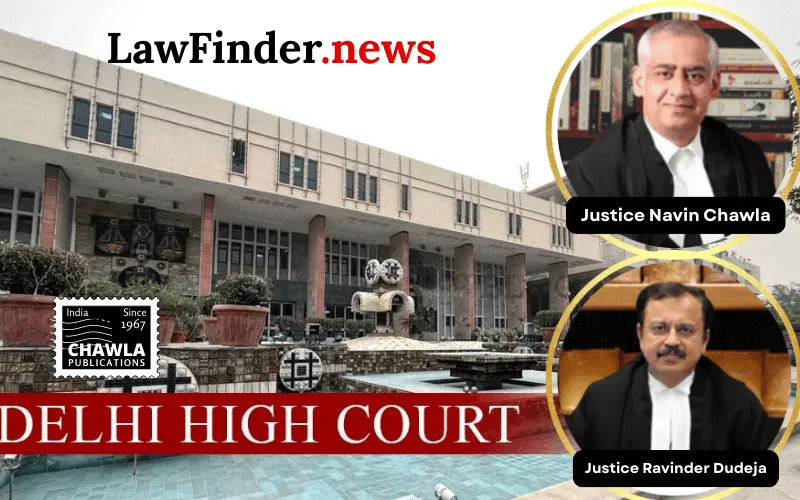
In a significant judgment, the Delhi High Court has granted bail to Khuram Parvez, who was accused under the Unlawful Activities (Prevention) Act (UAPA) for his alleged involvement in terrorist activities. The court's decision, delivered by a bench comprising Justices Navin Chawla and Ravinder Dudeja, highlights the balance between statutory restrictions and constitutional rights, particularly focusing on the prolonged incarceration of nearly 4.5 years without trial.
The case against Parvez, who is also the Program Coordinator of the Jammu and Kashmir Coalition of Civil Society, involved serious allegations including recruiting operatives for the proscribed terrorist organization Lashkar-e-Taiba (LeT) and collecting sensitive information about Indian security forces. Despite these grave charges, the court noted that the trial was still at the stage of arguments for framing charges, with over 190 witnesses to be examined, indicating a lengthy trial process.
In its judgment, the court emphasized the constitutional right to a speedy trial under Article 21 of the Indian Constitution, which guarantees the right to life and personal liberty. The court remarked that statutory restrictions under Section 43D(5) of the UAPA should not render the guarantee of personal liberty illusory, especially when trials are unlikely to conclude within a reasonable timeframe.
While granting bail, the court imposed stringent conditions on Parvez to mitigate any potential risks. These conditions include surrendering his passport, limiting his travel to the National Capital Territory of Delhi without court permission, and prohibiting him from making public statements related to the case. Furthermore, he is required to report to the investigating officer every fortnight and refrain from tampering with evidence or contacting witnesses.
The judgment also addressed the issue of Parvez's infirmity, as he has been wearing a prosthetic leg since a landmine incident in 2004, which the court considered in its decision to grant bail. The court acknowledged that while his infirmity did not deter him from alleged activities, it still warranted special consideration under the bail provisions.
The judgment reflects a nuanced approach to balancing national security concerns with individual constitutional rights. It underscores the judiciary's role in ensuring that legal proceedings do not transform into punitive measures without trial, especially in cases involving national security where the conviction rates under UAPA have been notably low.
This decision is likely to have significant implications for similar cases under the UAPA, reinforcing the judiciary's commitment to uphold constitutional rights even amid stringent statutory restrictions.
Bottom line:-
UAPA - Grant of bail under Section 43D(5) of UAPA must consider prolonged incarceration, the likelihood of trial completion, and the constitutional right to life and liberty under Article 21 of the Constitution.
Statutory provision(s):
Section 43D(5) of the Unlawful Activities (Prevention) Act, 1967; Article 21 of the Constitution of India; Section 437(1) of the Code of Criminal Procedure, 1973.
Khuram Parvez v. National Investigation Agency, (Delhi)(DB) : Law Finder Doc id # 2920578