Court declines substitution of Arbitrator, allowing short extension for award pronouncement to prevent further delays.
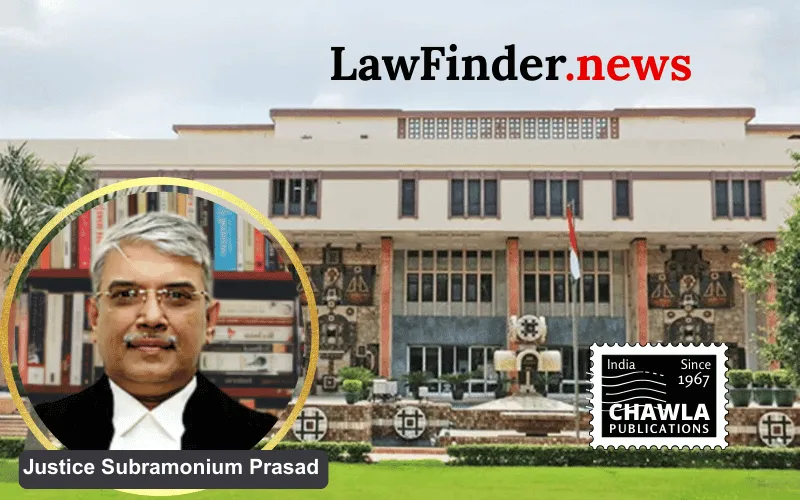
In a significant ruling, the Delhi High Court has decided to extend the mandate of an arbitrator in the long-standing dispute between M/s Inderjit Mehta Constructions Pvt Ltd and the Union of India. The decision, delivered by Justice Subramonium Prasad, comes after multiple extensions and protracted proceedings, with the arbitrator now poised to pronounce the award by January 31, 2026.
The case, originating from a contract dispute over construction work at Kirkee, has seen a series of delays primarily due to the slow progress of arbitral proceedings and administrative issues related to fees and costs. Initially, Mr. K.B. Rai was appointed as the sole arbitrator, but following his demise, Justice Vikramjit Sen, a former Supreme Court judge, was appointed to continue the proceedings.
Despite the progress in the arbitration, including the completion of final arguments and reservation of the award, the pronouncement of the award has been delayed for over a year. This led M/s Inderjit Mehta Constructions Pvt Ltd to petition for the substitution of the arbitrator, citing the expiration of the mandate and failure to pronounce the award.
The Union of India, however, filed an application seeking a short extension, arguing that the award was ready for pronouncement and that substitution at this stage would lead to unnecessary duplication of efforts and further delays.
Justice Prasad, while acknowledging the delays, noted that the arbitrator had communicated readiness to pronounce the award. He emphasized the substantial judicial time and effort invested in the proceedings and determined that granting a short extension was in the best interest of expeditious dispute resolution, as intended by the Arbitration and Conciliation Act, 1996.
In his judgment, Justice Prasad cited precedents set by the Supreme Court, including the recent case of Mohan Lal Fatehpuria v. M/s Bharat Textiles, highlighting the importance of adhering to the statutory timelines under Section 29A of the Arbitration Act. However, he distinguished the present case on the grounds that the award was ready, and further substitution would only exacerbate the delays.
The court has extended the mandate until January 31, 2026, with a clear directive that no further extensions will be entertained, ensuring that the arbitration reaches its conclusion without additional setbacks.
This ruling underscores the judiciary's commitment to fostering efficient dispute resolution processes, balancing procedural rigor with pragmatic considerations to avoid wastage of judicial resources and ensure timely justice.
Bottom Line:
Extension of arbitral mandate granted despite previous extensions, as the award was ready for pronouncement and substitution of the Arbitrator at final stage would lead to duplication of effort and delay.
Statutory provision(s): Arbitration and Conciliation Act, 1996 Sections 14, 15(2), 29A, 29A(6)
M/s Inderjit Mehta Constructions Pvt Ltd v. Union of India, (Delhi) : Law Finder Doc Id # 2829076