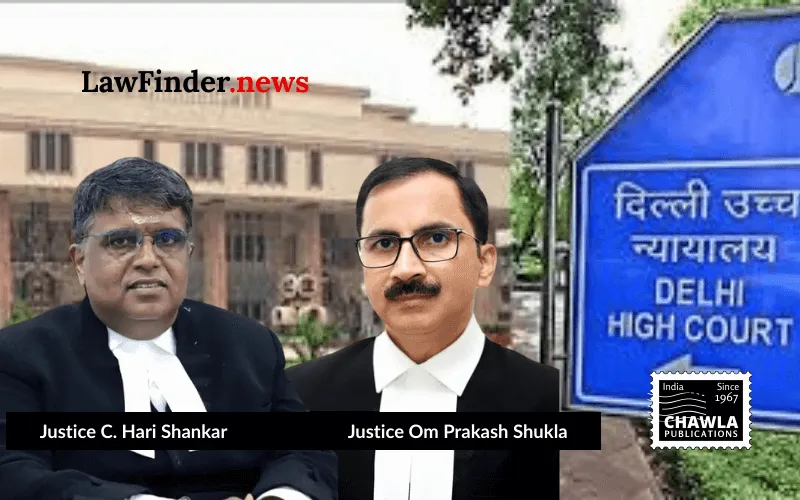
Court Quashes Interview-Centric Process and Calls for Structured Evaluation for PwBD Candidates
In a landmark judgment, the Delhi High Court has quashed the results of a recruitment process conducted by the National Institute of Educational Planning and Administration (NIEPA), emphasizing the need for fair and transparent selection procedures for Persons with Benchmark Disabilities (PwBD). The court's decision underscores the constitutional and statutory mandates under the Rights of Persons with Disabilities Act, 2016, advocating for substantive equality and reasonable accommodation in public employment.
The case, titled "Dr. Sachin Kumar v. National Institute of Educational Planning And Administration," was presided over by a bench of Justices C. Hari Shankar and Om Prakash Shukla. Dr. Sachin Kumar, a candidate with 75% locomotor disability, challenged the recruitment process, which was solely interview-based without any structured criteria, as arbitrary and violative of Articles 14 and 16 of the Indian Constitution.
The court found that NIEPA's recruitment process lacked transparency and objectivity, as it did not provide any structured evaluation framework beyond the interview. This approach was deemed inconsistent with the constitutional principles of fairness and equality, particularly for reserved PwBD posts. The court highlighted that the exclusive reliance on interviews for selection was arbitrary and did not align with the standards set by the University Grants Commission (UGC) Regulations, 2018, which call for a comprehensive evaluation of academic merits.
Furthermore, the court criticized the conversion of an unfilled PwBD vacancy into an EWS-PwBD vacancy, stating it was impermissible and contrary to the horizontal nature of reservations mandated by the RPwD Act. The judgment emphasized that unfilled vacancies should be carried forward without altering their nature, ensuring that PwBD candidates are not unjustly excluded.
In its directive, the court ordered NIEPA to re-advertise the post reserved for PwBD candidates, ensuring it retains its original horizontal reservation status. The decision mandates that future recruitment processes must incorporate structured and objective evaluations alongside interviews, promoting transparency and genuine consideration for PwBD candidates.
The judgment reinforces the imperative for institutions to uphold the rights of individuals with disabilities, aligning recruitment practices with statutory obligations and constitutional values of equality and non-discrimination.
Bottom Line:
Rights of Persons with Disabilities Act, 2016 - Reservation for PwBD candidates in public employment must be meaningfully implemented with reasonable accommodation and relaxed standards, ensuring substantive equality and inclusion.
Statutory provision(s): Rights of Persons with Disabilities Act, 2016, UGC Regulations, 2018, Articles 14 and 16 of the Constitution of India