Court Directs Implementation of Hybrid Hearing Facilities to Enhance Accessibility and Efficiency in Consumer Justice
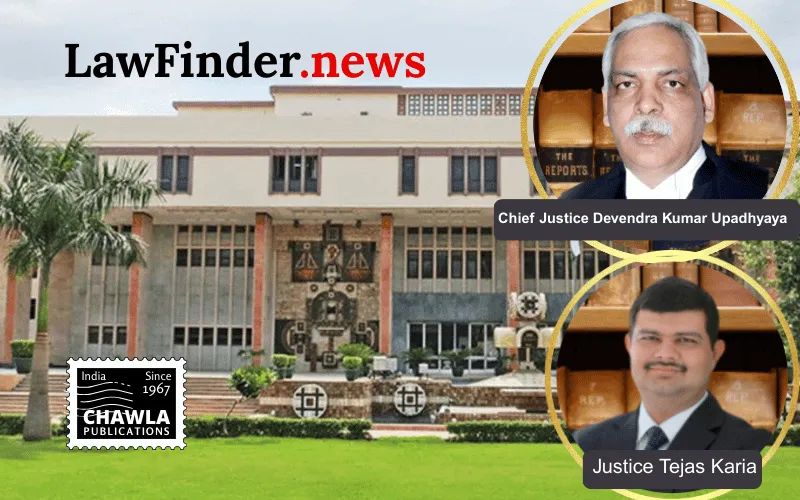
In a significant ruling aimed at improving the accessibility and efficiency of consumer justice, the Delhi High Court has directed the resumption of video conferencing facilities across all District Consumer Disputes Redressal Commissions in Delhi. The order, passed by a division bench comprising Chief Justice Devendra Kumar Upadhyaya and Justice Tejas Karia, mandates the restoration of hybrid hearing facilities within eight weeks.
The court's decision came in response to a public interest litigation (PIL) filed by S.B. Tripathi, a practicing advocate, who highlighted the discontinuation of video conferencing facilities post-COVID-19 and the challenges it posed for advocates and litigants. Tripathi argued that the hybrid mode of hearing, which is functional in other judicial bodies such as the Delhi High Court and the Supreme Court, should be reinstated in the District Commissions for the convenience of the legal community and the public.
During the proceedings, the court acknowledged the functional video conferencing facilities in four out of ten District Commissions. However, it emphasized the need for this facility to be operational in the remaining six District Commissions, specifically the West, New Delhi, North-West, Central, East, and South Districts.
The court also addressed administrative inefficiencies, particularly the acute shortage of support staff in consumer forums. Although previous orders had been issued to the Government of NCT of Delhi to bolster staffing levels, the issue remains under consideration in connected legal proceedings.
In its judgment, the court reiterated the importance of consumer forums in safeguarding consumer rights and stressed the necessity of operational efficiency. It has instructed the respondents, including the Union of India and the Government of NCT of Delhi, to ensure that video conferencing links are included in the daily cause lists of all District Commissions, thereby facilitating hybrid hearings.
This directive forms part of a broader initiative to modernize consumer dispute resolution mechanisms, ensuring they keep pace with technological advancements and continue to serve the public effectively.
Bottom Line:
Directions issued for resuming video conferencing facilities in District Consumer Disputes Redressal Commissions in Delhi, aiming to improve accessibility and efficiency in consumer justice forums.
Statutory provision(s): Article 226 of the Constitution of India, 1950, Section 151 of the Code of Civil Procedure, 1908, Consumer Protection Act, 1986
S B Tripathi v. Union Of India, (Delhi)(DB) : Law Finder Doc id # 2868181