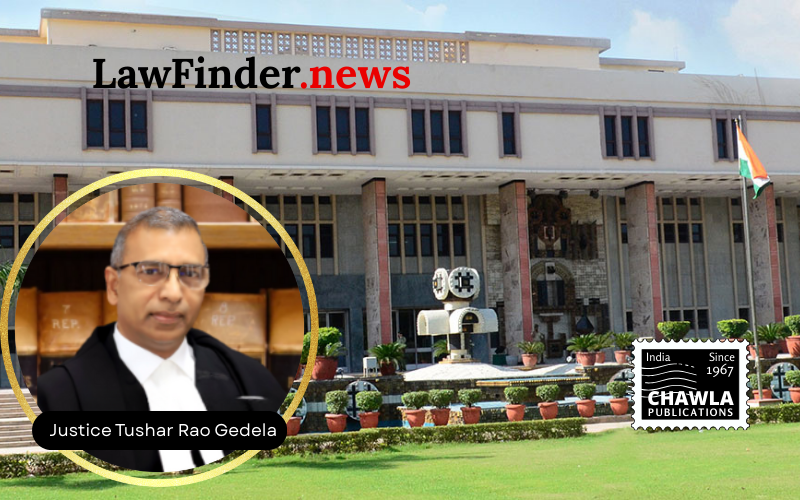
Court Cites Lapses and Possible Tampering in Police Probe, Calls for Fresh De Novo Investigation to Ensure Justice
In a significant judgment delivered on November 27, 2025, the Delhi High Court directed the Central Bureau of Investigation (CBI) to take over the investigation of the suspicious death of Arnav Duggal, a 23-year-old ITC Grand Bharat manager. The decision came in response to a writ petition filed by Anu Duggal, mother of the deceased, challenging the investigation conducted by the Delhi Police and Crime Branch.
Arnav Duggal was found dead under mysterious circumstances on June 13, 2017, at the residence of Megha Tiwary, his girlfriend, located in Shakuntalam Apartments, Dwarka, Delhi. Initially, the police treated the case as a suicide based on the version of Megha Tiwary, who was the only person present at the flat during the incident. However, the petitioner alleged foul play and raised serious concerns about the impartiality and thoroughness of the investigations.
The Court meticulously examined the evidence and noted multiple irregularities and discrepancies in the police investigation, including:
- - Delay and Non-registration of FIR: The police delayed registering the First Information Report (FIR) for almost eight months, compelling the petitioner to seek judicial intervention.
- - Tampering with Mobile Phones: The mobile phone of Megha Tiwary was seized in a switched-on condition but was found to have been repeatedly switched on and off while in police custody. The Court noted this indicated possible tampering, undermining the integrity of crucial digital evidence.
- - Discrepancies in Megha Tiwary's Statements: Contradictory accounts regarding the time and circumstances of discovering Arnav’s body were highlighted. CCTV footage and call records contradicted her claim of being harassed and forced to stay with the deceased, instead showing a close relationship up to the day of the incident.
- - Lack of Crucial Evidence Seizure and Examination: The ceiling fan, alleged to be the instrument of hanging, was neither seized nor examined properly, and was later sold by Megha’s father, raising suspicions about evidence tampering.
- - Incomplete Crime Scene Documentation: Photographs and forensic reports were inconsistent, with important images missing from police files, and forensic examinations such as fingerprint analysis on the ligature and knife/scissors not fully conducted.
- - Inadequate Investigation and Court Monitoring: The Court observed that investigations were conducted with a preconceived notion of suicide, ignoring alternate possibilities. The learned Chief Metropolitan Magistrate (CMM) repeatedly criticized the investigating officers for their lack of diligence and ordered multiple inquiries, but lapses persisted.
The Delhi High Court, after reviewing detailed arguments and evidence from both the petitioner’s counsel and the State, reiterated the established legal principles that transfer of investigation to CBI is an extraordinary power exercised only in exceptional cases to ensure fair and impartial investigation and maintain public confidence in the justice system.
The Court found that the circumstances surrounding Arnav Duggal’s death and the investigation were exceptional enough to warrant such intervention. It noted that the investigation lacked bona fide, was tainted by bias, and failed to unravel the truth effectively.
Accordingly, the Court ordered:
- 1. Immediate transfer of the entire case and all records to the CBI within four weeks.
- 2. The CBI to conduct a fresh, de novo investigation into the death, including examining lapses and possible misconduct by Delhi Police officers.
- 3. The CBI to expedite the investigation and submit its report to the trial court.
- 4. The Delhi Police to cooperate fully with the CBI and for disciplinary action to be considered against officers found responsible for investigative lapses.
This ruling underscores the judiciary’s commitment to ensuring justice by mandating independent investigation agencies to step in when local probes are found deficient. The case remains under judicial scrutiny, with the hope that the CBI’s involvement will bring transparency and a conclusive resolution to the tragic death of Arnav Duggal.
Bottom Line:
Transfer of investigation to CBI ordered due to glaring lapses, discrepancies, and lack of bona fide in police investigation of suspicious death; constitutional courts exercise such power sparingly in exceptional cases to ensure fair investigation and justice.
Statutory provision(s): Article 226, Constitution of India, 1950; Section 302, Indian Penal Code, 1860; Section 156(3), Code of Criminal Procedure, 1973; Section 174, Code of Criminal Procedure, 1973