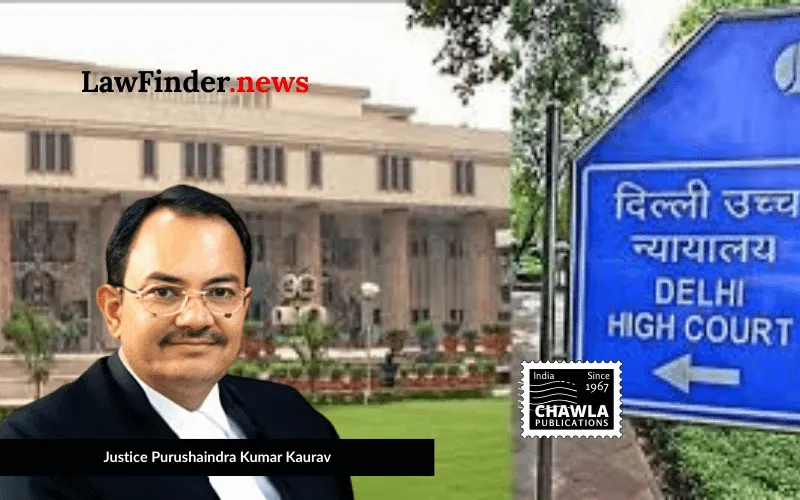
High Court Directs NCDRC to Investigate and Validate Authenticity of Disputed Order
In a noteworthy decision, the Delhi High Court has directed the National Consumer Disputes Redressal Commission (NCDRC) to thoroughly investigate allegations of alteration in a judicial order. The petitioner, Neerja, claims that an order dated October 3, 2024, originally uploaded by the NCDRC, was surreptitiously deleted and replaced by a different order. This prompted Neerja to seek recourse from the Delhi High Court.
Justice Purushaindra Kumar Kaurav, presiding over the matter, emphasized the finality and conclusiveness of judicial records, as stated in various Supreme Court judgments. The High Court underscored the principle that once a judicial order is recorded, its authenticity cannot be contradicted by affidavits or external evidence unless rectified by the same court.
The petitioner presented evidence suggesting discrepancies between the original order and the one currently on record. In response, the High Court has directed the NCDRC to reconsider the petitioner’s application and provide specific findings on the authenticity of the disputed order. The court also granted the petitioner the liberty to submit additional documents to support her claims.
This decision highlights the importance of maintaining the integrity of judicial records and ensuring that grievances related to such records are addressed promptly and thoroughly. The High Court’s directive to the NCDRC aims to ensure transparency and uphold the trust in judicial proceedings.
Bottom line:-
Judicial records are conclusive and cannot be contradicted by external evidence or affidavits. If an error in the judicial record is alleged, it must be brought to the attention of the same Court that recorded it for rectification or review.
Statutory provision(s): Judicial Records, National Consumer Disputes Redressal Commission (NCDRC), Legal Remedies, Rectification of Judicial Records.
Neerja v. Union of India, (Delhi) : Law Finder Doc id # 2906524