Judgment Highlights Misapplication of Special Marriage Act in Hindu Marriage Act Proceedings, Orders Fresh Adjudication
In a significant ruling, the Delhi High Court has set aside a Family Court's decree dissolving the marriage of M Suman Sankar Bhunia and Debarati Bhunia Chakraborty, citing grave jurisdictional and procedural errors. The appellate court found that the Family Court had erroneously applied provisions of the Special Marriage Act, 1954, to a divorce petition filed under the Hindu Marriage Act, 1955.
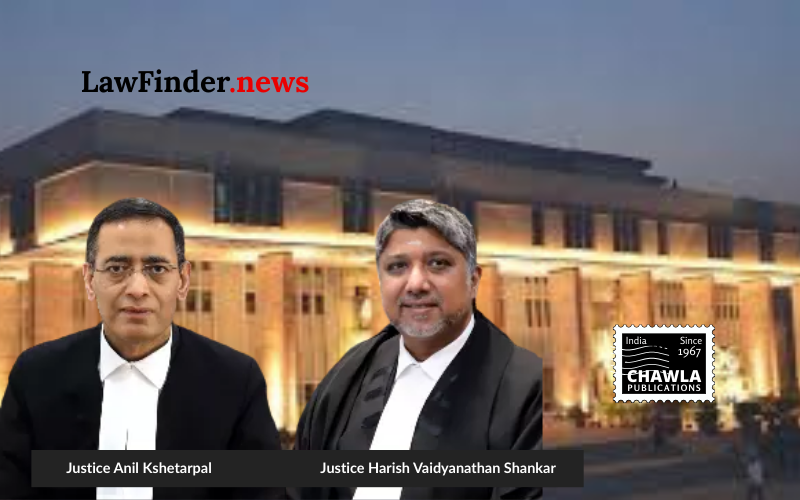
The Division Bench, comprising Justices Anil Kshetarpal and Harish Vaidyanathan Shankar, emphasized that reliance on non-existent statutory provisions, specifically Section 28A of the Special Marriage Act, rendered the Family Court's judgment invalid. The High Court noted that such misapplication not only reflects a misunderstanding of the applicable legal framework but also undermines the integrity of the judicial process.
The case, originally filed under Section 13(1)(ia) of the Hindu Marriage Act for divorce on the grounds of cruelty, was mishandled by the Family Court, which conflated distinct legal provisions. The High Court criticized the Family Court for closing the respondent-wife's right to lead evidence prematurely and for issuing a decree without any substantive evidence being recorded.
Furthermore, the High Court expressed concern over the Family Court Judge's conduct, citing repeated instances of statutory misapplication in matrimonial cases. It has directed the concerned Family Court Judge to undergo refresher training in Matrimonial Laws at the Delhi Judicial Academy.
The High Court's judgment mandates a de novo adjudication of the case, allowing both parties to present oral and documentary evidence. The matter has been remanded to the Principal Judge, Family Court, Patiala House Courts, New Delhi, for fresh proceedings in accordance with proper legal procedures.
This ruling underscores the necessity for judicial officers to adhere strictly to statutory mandates and refrain from improvising legal provisions to expedite case disposal.
Bottom Line:
Family Court cannot apply provisions of the Special Marriage Act, 1954, in a petition filed under the Hindu Marriage Act, 1955. Relying on non-existent provisions of law, such as Section 28A of the Special Marriage Act, is impermissible and invalidates the judgment.
Statutory provision(s): Hindu Marriage Act, 1955 Section 13(1)(ia), Special Marriage Act, 1954, Family Courts Act, 1984, Sections 498A and 506 of the Indian Penal Code, 1860, Protection of Women from Domestic Violence Act, 2005, Guardians and Wards Act, 1890, Dowry Prohibition Act, 1961, Code of Criminal Procedure, 1973, Order VII Rule 11 and Order VII Rule 14 of the Code of Civil Procedure, 1908.
M Suman Sankar Bhunia v. Debarati Bhunia Chakraborty, (Delhi)(DB) : Law Finder Doc Id # 2814963