Court Upholds Majority of Tribunal's Findings but Rejects Claim for Additional Costs on Plant and Machinery
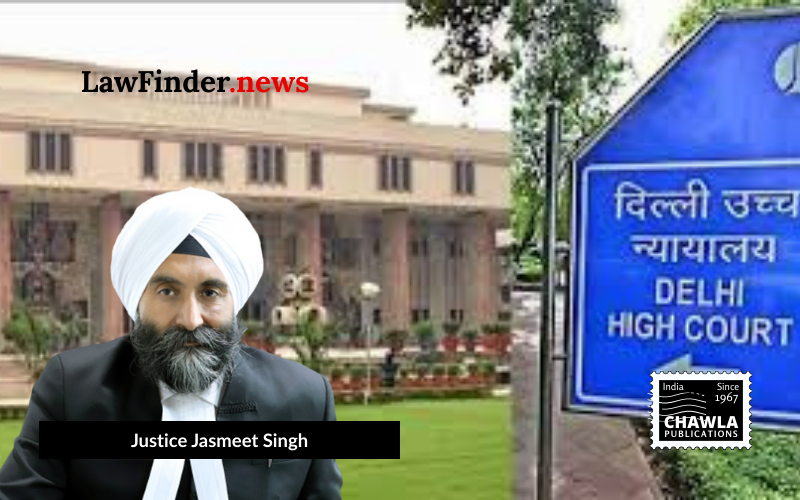
In a significant judgment concerning arbitration between the National Highways Authority of India (NHAI) and Hindustan Construction Co. Ltd (HCC), the Delhi High Court has partially set aside an arbitral award relating to additional costs incurred during the extended period of the contract. The judgment, delivered by Justice Jasmeet Singh, upheld the majority of the tribunal's findings but rejected HCC's claim for Rs. 30.20 crores towards the extended stay of plant and machinery at the project site.
The dispute arose from a contract executed in 2005 between NHAI and HCC for the four-laning of National Highway No. 28 in the Lucknow-Ayodhya section. The project, initially scheduled to be completed by 2008, was extended until 2011 due to various delays. The tribunal had awarded HCC additional costs for the extended period, which NHAI contested under Section 34 of the Arbitration and Conciliation Act, 1996, seeking to set aside the award.
The court noted the tribunal's plausible interpretation of contractual clauses concerning delays not attributable to HCC and upheld the award of additional costs in several categories, including overhead expenses and unrecovered price variations for materials like cement and steel. However, the court found the tribunal's reliance on HCC's Monthly Progress Reports (MPRs) over the Engineer's MPRs for assessing machinery deployment to be unsustainable. The court observed that the tribunal had ignored vital evidence, leading to a patent illegality in awarding costs for machinery retention based on HCC's self-prepared reports.
Justice Singh emphasized that the tribunal's findings on delay were based on a thorough examination of evidence and contractual terms, which warranted limited interference under Section 34. However, the court exercised its power to set aside the award concerning machinery costs, considering the lack of corroborative material and the erroneous disregard of the Engineer's contemporaneous reports.
The court also upheld the tribunal's award of interest at 12% compounded monthly, citing contractual provisions and precedents affirming such awards in similar disputes. The judgment reiterates the restricted scope of judicial review under Section 34, emphasizing the arbitrator's role as the final authority on facts and contractual interpretation.
Statutory provision(s): Section 34 of the Arbitration and Conciliation Act, 1996; National Highways Authority of India Act, 1988; National Highways Act, 1956; Indian Evidence Act, 1872; Indian Contract Act, 1872.



