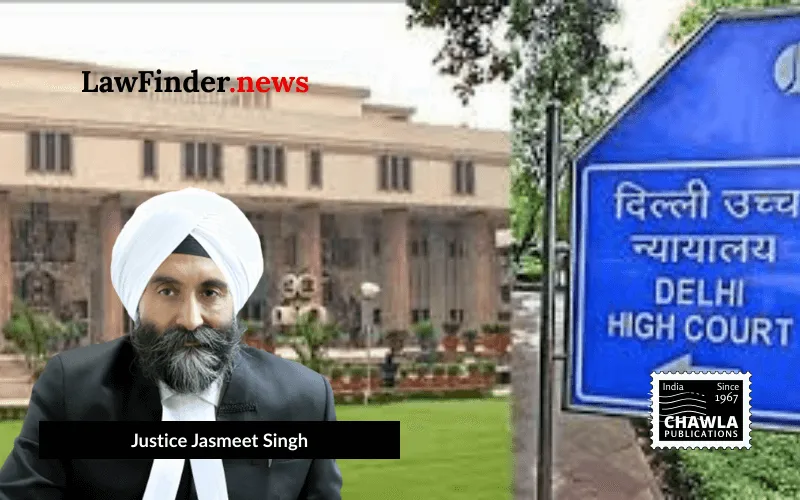
Court Upholds Doctrine of Legitimate Expectation, Directs CBSE to Allow Affected Students to Register for Additional Subject Examination
In a significant ruling, the Delhi High Court has quashed the Central Board of Secondary Education's (CBSE) decision to retrospectively withdraw the facility for private candidates to appear for Additional Subject examinations. This decision comes as a relief to students of the 2025 batch who had planned their academic year based on the existing CBSE Bye Laws, which allowed them a two-year window to opt for an Additional Subject.
The judgment, delivered by Justice Jasmeet Singh, addressed the petition filed by Prabhroop Kaur Kapoor and others against the Union of India and the CBSE. The petition challenged the notifications issued by CBSE in September 2025, which abruptly eliminated the option for private candidates to appear for an Additional Subject examination, a decision made without prior notice.
The court held that the CBSE Bye Laws carry statutory force and their amendments must be adequately notified and applied prospectively. Justice Singh emphasized that the abrupt policy change violated the Doctrine of Legitimate Expectation and Article 14 of the Constitution of India, which guarantees equality before the law.
The petitioners, who had completed their Class XII board examinations in 2025, had relied on the prevailing CBSE policy to take a gap year to prepare for an Additional Subject. However, the sudden policy change left them unable to appear for the examination as private candidates, potentially impacting their eligibility for higher education programs requiring specific subject combinations.
The court noted that the CBSE's decision lacked fairness and failed to provide transitional safeguards for students who had already altered their academic plans. The judgment highlighted that the CBSE's notification of the policy change via the minutes of a meeting was inadequate and did not constitute proper notification.
Furthermore, the court dismissed CBSE's argument that students could appear for the examination through the National Institute of Open Schooling (NIOS), noting that many universities require a consolidated marksheet from a single recognized board.
In conclusion, the Delhi High Court directed the CBSE to take immediate steps to allow the petitioners to register for the Additional Subject examination. The court's decision underscores the importance of procedural fairness and the protection of students' legitimate expectations in educational policy decisions.
Bottom Line:
Doctrine of Legitimate Expectation - Withdrawal of facility to appear in Additional Subject examination retrospectively without prior notice violates legitimate expectation and Article 14 of the Constitution of India.
Statutory provision(s): Article 14 of the Constitution of India, Doctrine of Legitimate Expectation, CBSE Examination Bye Laws
Prabhroop Kaur Kapoor v. Union of India, (Delhi) : Law Finder Doc id # 2849337