Court exercises inherent powers under Bharatiya Nagarik Suraksha Sanhita, 2023 to quash non-compoundable offences, emphasizing the importance of justice and responsible use of criminal proceedings.
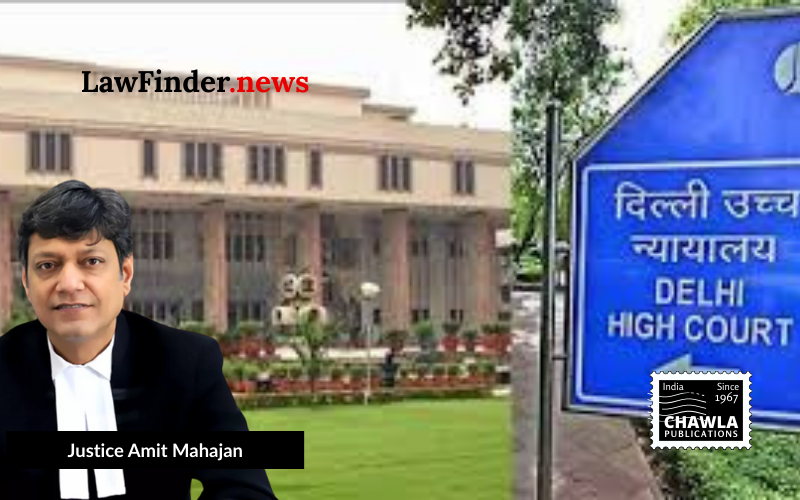
In a significant ruling, the Delhi High Court, presided over by Justice Amit Mahajan, has quashed an FIR registered in 2016 under multiple sections of the Indian Penal Code (IPC) and the Protection of Children from Sexual Offences Act (POCSO). The FIR involved charges of assault and sexual harassment, including Sections 323, 341, 354, and 509 of the IPC, and Section 8 of POCSO. The decision comes after the parties involved reached a mutual settlement, resolving their disputes amicably.
The petitioners, Santosh Yadav and another, were accused of inappropriate conduct and causing harm during an altercation on October 20, 2016. However, the victim, who was an adult at the time of the incident, admitted that the allegations in the FIR were exaggerated and filed under ill-advice. The ossification test had established the victim's age as 18, rendering the applicability of POCSO moot.
The High Court invoked its powers under Section 528 of the Bharatiya Nagarik Suraksha Sanhita, 2023 (formerly Section 482 of the CrPC), which allows for the quashing of non-compoundable offences if a settlement is reached, provided the offences are not heinous and do not have a serious societal impact. The Court emphasized that such powers must be exercised with caution and are not applicable to heinous crimes like murder or rape.
The judgment referenced established legal precedents, including the Supreme Court's decisions in "Narinder Singh v. State of Punjab" and "Parbatbhai Aahir v. State of Gujarat," which outline the principles for quashing proceedings when parties have resolved their disputes. The Court noted that continuation of the proceedings would constitute an abuse of the legal process, especially given the lack of heinousness in the alleged offences and the amicable resolution between the parties.
Justice Mahajan highlighted the misuse of the criminal justice system as a tool for personal vendetta and stressed the importance of filing FIRs responsibly. The decision to quash the FIR reflects the Court's commitment to securing the ends of justice and preventing the abuse of judicial processes.
The ruling serves as a reminder of the judiciary's role in balancing the scales of justice while ensuring that criminal proceedings are not misused for settling personal scores.
Bottom Line:
High Court has inherent power under Section 528 of the Bharatiya Nagarik Suraksha Sanhita, 2023 (formerly Section 482 of CrPC) to quash non-compoundable offences on the basis of settlement between parties, provided such cases do not involve heinous offences or serious societal impact.
Statutory provision(s): Bharatiya Nagarik Suraksha Sanhita, 2023 Section 528, Indian Penal Code Sections 323, 341, 354, 509, Protection of Children from Sexual Offences Act, 2012 Section 8
Santosh Yadav v. State of NCT of Delhi, (Delhi) : Law Finder Doc Id # 2819726