Court Upholds Right to Education, Allows Harshit Agrawal to Continue Medical Studies Amidst Ongoing Investigation
In a significant judgment, the Delhi High Court has ordered the reinstatement of Harshit Agrawal's admission to the MBBS program at Bhima Bhoi Medical College and Hospital, Balangir, Odisha. The court ruled in favor of the petitioner, Harshit Agrawal, whose admission was previously revoked due to allegations of malpractice in the NEET-UG 2024 examination.
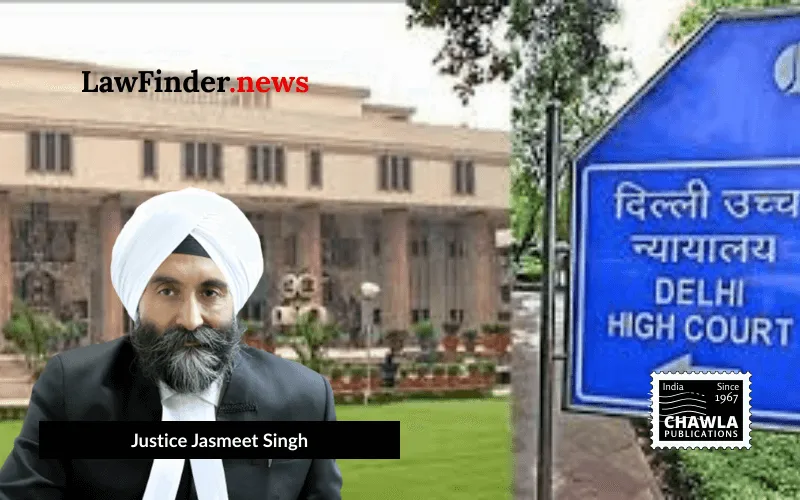
Justice Jasmeet Singh, presiding over the case, emphasized the importance of the right to pursue higher education, which, although not explicitly a fundamental right, is a crucial obligation of the state. The court noted that Harshit Agrawal was only named as a witness in the CBI chargesheet and not as an accused, thereby lacking prima facie evidence of malpractice on his part.
The controversy began when the National Testing Agency (NTA) issued a show-cause notice to Agrawal following allegations of question paper leakage in the NEET-UG 2024 exam. Despite Agrawal's response, the NTA proceeded to withdraw his exam score, leading to the cancellation of his admission.
The court highlighted that the cancellation of Harshit Agrawal's admission disrupted his academic progress without justifiable grounds. It referenced a similar case where another student, Kirtee Koushika Panda, was allowed to continue her studies by the Supreme Court, despite being part of the same investigation list.
In its judgment, the Delhi High Court issued a Mandamus directing the respondents to allow Harshit Agrawal to resume his MBBS classes. The court's decision underscores the critical balance between ensuring the integrity of competitive examinations and protecting students' educational rights.
This judgment is expected to have broader implications on how educational institutions and examination bodies handle allegations of malpractice, particularly when the individuals involved are not directly accused.
Bottom Line:
Right to pursue higher or professional education, though not explicitly spelt out as a fundamental right, is an affirmative obligation on the state and cannot be curtailed lightly.
Statutory provision(s): Article 226 of the Constitution of India
Harshit Agrawal v. National Testing Agency, (Delhi) : Law Finder Doc Id # 2836044