In a significant judgment, the Delhi High Court reinstates the civil suit, emphasizing the need for trial to adjudicate coparcenary rights and urbanization impact on ancestral land.
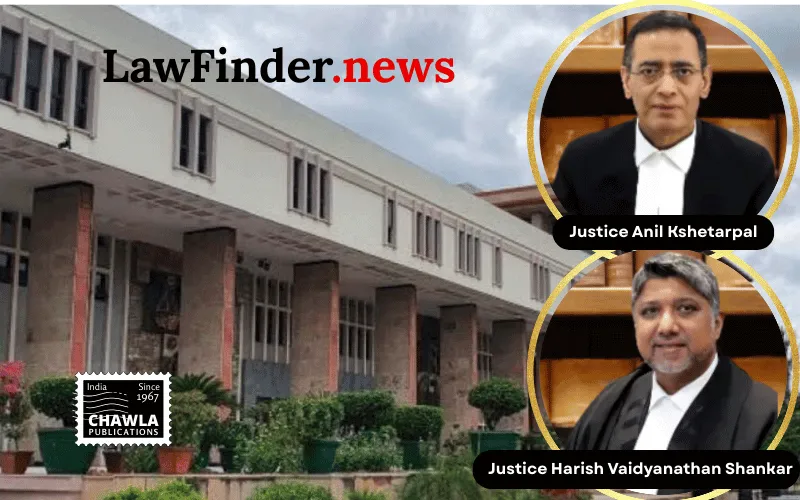
In a landmark decision, the Delhi High Court has overturned the rejection of a civil suit concerning ancestral property, reinstating the case for further proceedings. The judgment was delivered by a Division Bench comprising Mr. Anil Kshetarpal and Mr. Harish Vaidyanathan Shankar. The appeal was filed by Ms. Sonia Rathi and Master Aman Rathi, the legal heirs of the deceased appellant, Ms. Indu Rani, against the impugned order of the learned Single Judge, which had previously dismissed the suit under Order VII Rule 11 of the Civil Procedure Code, 1908.
The dispute revolves around a piece of ancestral land situated in the village of Iradat Nagar, Naya Bans, which was allegedly urbanized in 2006. The appellant, asserting her rights as a Class-I heir, claimed a one-third share in the property, which had been unlawfully mutated and sold by her brothers without her consent. The suit sought a declaration that such sales were null and void, along with the cancellation of sale deeds and partition of the property.
The learned Single Judge had initially dismissed the suit, citing the absence of a cause of action and the applicability of the Delhi Land Reforms Act, 1954, which ostensibly excluded daughters from inheriting Bhumidhari rights. However, the appellants argued that the urbanization of the land rendered the DLR Act inapplicable, bringing the Hindu Succession Act, 1956 into play, which grants equal coparcenary rights to daughters.
The Division Bench of the Delhi High Court recognized the merit in the appellants' arguments, highlighting that mutation entries do not confer title and that issues regarding ancestral property and coparcenary rights require evidence and a full trial. The court stressed that objections pertaining to limitation and Order II Rule 2 of the CPC necessitate factual determination and cannot be adjudicated at the threshold stage under Order VII Rule 11 CPC.
Furthermore, the court observed that the deletion of Section 4(2) of the Hindu Succession Act in 2005 allows the rule of succession under the Hindu Succession Act to prevail over Section 50 of the DLR Act, especially in cases of urbanized land. This amendment affirms the coparcenary rights of daughters, thereby entitling them to a share in ancestral property.
The judgment also referenced the Supreme Court's decision in Vineeta Sharma v. Rakesh Sharma, which established the retrospective application of coparcenary rights to daughters, irrespective of the father's living status as of the amendment date.
By reinstating the suit, the Delhi High Court has underscored the importance of conducting a full trial to address the complex issues of coparcenary rights, urbanization, and the impact of statutory amendments on succession laws.
Bottom Line:
Rejection of plaint under Order VII Rule 11 CPC - Mutation entries do not confer title, and objections such as limitation, Order II Rule 2 CPC, or applicability of special laws like DLR Act require factual determination and cannot be decided at the threshold. Issues concerning ancestral property, coparcenary rights, and urbanization of land are matters requiring evidence and a full trial.
Statutory provision(s): Civil Procedure Code, 1908 - Order VII Rule 11, Hindu Succession Act, 1956 - Section 6, Delhi Land Reforms Act, 1954 - Section 50, Limitation Act, Order II Rule 2 CPC