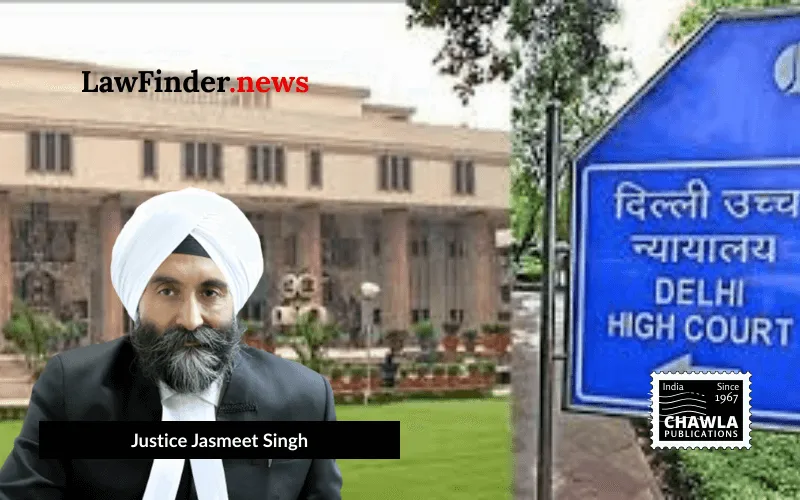
Bar Council of India Directed to Reconsider Attendance Norms in Light of National Education Policy, 2020
In a landmark judgment, the Delhi High Court has ruled against the rigid enforcement of mandatory attendance norms for law students pursuing their LL.B. degrees. The court, presided over by Justice Jasmeet Singh, addressed a series of writ petitions filed by students of the University of Delhi who were unable to meet the minimum attendance requirement of 70% as prescribed by the Bar Council of India's (BCI) Rules of Legal Education, 2008.
The court found that mere shortfall in attendance should not be the sole reason for detaining students or barring them from examinations and further academic progression. Justice Singh emphasized that educational institutions are obligated to provide adequate opportunities for students to make up for attendance deficits through measures such as additional classes or assignments.
Citing the Division Bench's judgment in the case of "Sushant Rohilla, Law Student of I.P. University," the court reiterated that detention solely on attendance grounds can have detrimental effects on students' mental health and career prospects. The court directed the BCI to re-evaluate its attendance norms, keeping in mind the National Education Policy, 2020, which advocates for a more flexible and holistic approach to education.
Further, the court observed that institutions often fail to conduct the mandatory number of classes, putting students at a disadvantage. The judgment emphasized that the enforcement of attendance norms without ensuring the provision of adequate classes creates an unfair burden on students.
The BCI was advised to incorporate flexibility and ameliorative measures in its attendance policy, allowing credit for activities such as moot courts, seminars, and internships. The court also acknowledged the systemic issue of attendance requirements, highlighting that barring students from exams due to attendance shortfalls should not be the first or only resort.
The judgment has been hailed as a significant step towards reforming legal education in India, with a focus on student well-being and the evolving needs of the education system.
Bottom Line:
Legal Education - Mandatory attendance norms for LL.B students - Lack of minimum attendance alone cannot be a valid ground for detaining students from pursuing or continuing their academic careers. Institutions must provide sufficient opportunity to students to make up for attendance deficits.
Statutory provision(s):
- Bar Council of India, Rules of Legal Education, 2008, Rules 10 and 12
- Constitution of India, Articles 226 and 227
Ms. Muskaan Aamir v. Union of India, (Delhi) : Law Finder Doc Id # 2842101