Court clarifies the bounds of Section 17(B) of the Industrial Disputes Act, limiting wage entitlements post-superannuation
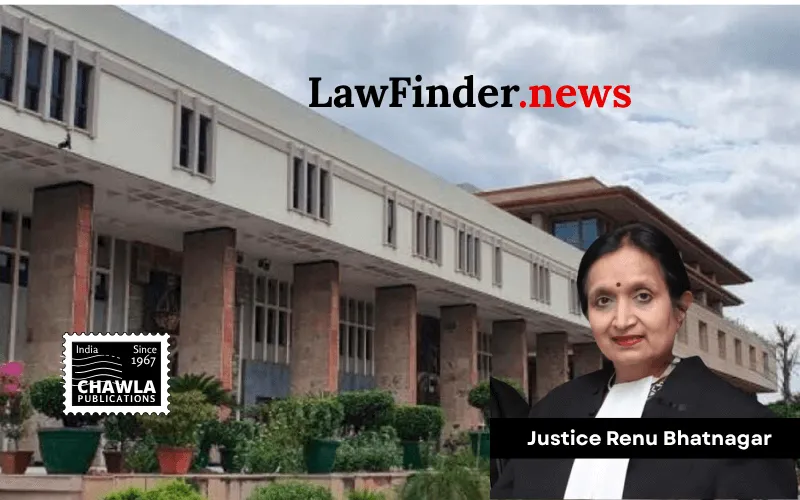
In a landmark judgment passed by the Delhi High Court on February 9, 2026, the court addressed the contentious issue of wage entitlements under Section 17(B) of the Industrial Disputes Act, 1947, post-superannuation. Presided over by Justice Renu Bhatnagar, the case involved the Life Insurance Corporation of India (LIC) as the petitioner and G.K. Nijhawan as the respondent.
The petitioner, LIC, sought modification of an earlier court order dated November 17, 2017, which directed them to pay Nijhawan his last drawn wages or minimum wages from the date of the award till the disposal of the writ petition. The core issue revolved around whether these payments should continue after Nijhawan reached the age of superannuation.
Nijhawan, who had been employed with LIC since June 1984, faced charges of insubordination, which led to a domestic inquiry. However, the inquiry was deemed invalid by the Central Government Industrial Tribunal, leading to an award for his reinstatement with full back wages. LIC challenged this award, resulting in the writ petition in question.
The court meticulously examined precedents from various High Courts, including the Delhi High Court and Gujarat High Court, emphasizing that the statutory obligation under Section 17(B) presupposes a subsisting employer-employee relationship. Justice Bhatnagar noted that once a workman attains superannuation, this relationship ceases, thereby terminating the liability for wage payments under Section 17(B).
The judgment cited cases such as Delhi Transport Corporation v. Ramesh Chander and Essar Project Ltd. v. N.D. Jagdishwara to reinforce the interpretation that Section 17(B) is intrinsically linked to an active employment relationship, which inherently ends upon superannuation.
Despite Nijhawan's plea for continued payments due to financial hardship and unemployment, the court adhered strictly to legal precedents, asserting that financial conditions cannot override statutory limits. Consequently, the court allowed LIC's application, ruling that wage payments under Section 17(B) should cease as of April 30, 2024, the month when Nijhawan reached superannuation age.
The decision marks a significant clarification in labor law, ensuring that the scope of Section 17(B) is confined within the boundaries of active employment, mitigating potential liabilities for employers beyond retirement age.
Bottom Line:
Section 17(B) of the Industrial Disputes Act, 1947 does not extend beyond the age of superannuation of a workman, as the entitlement to wages under this section presupposes a subsisting employer-employee relationship which ceases upon superannuation.
Statutory provision(s): Industrial Disputes Act, 1947 Section 17(B), Code of Civil Procedure, 1908 Section 151
The ruling provides clarity and precedence for similar cases in the future, establishing a clear demarcation between active employment benefits and post-retirement entitlements under the Industrial Disputes Act.
Life Insurance Corporation of India v. G.K. Nijhawan, (Delhi) : Law Finder Doc id # 2850843