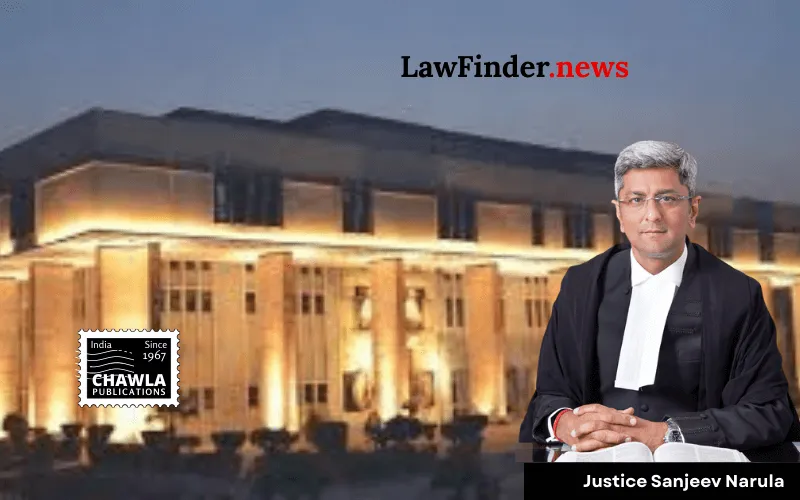
Court Orders Reinstatement, Emphasizes Need for Fair Inquiry Process Before Termination
In a significant ruling, the Delhi High Court has set aside the termination of Avinash Kumar, a Manager (Finance) at Energy Efficiency Services Limited (EESL), due to alleged unauthorised absence from duty. The Court, presided over by Justice Sanjeev Narula, emphasized the necessity of adhering to principles of natural justice and conducting a proper inquiry before effectuating termination under the service rules.
Avinash Kumar's termination was initiated by EESL on December 6, 2019, following his failure to report at Agartala, Tripura, after being transferred from the Corporate Office in Delhi/NCR. The termination was based on a deeming provision in Clause 24.9 of the service rules, which provides for automatic loss of lien on the post after 90 days of unauthorised absence. However, the Court held that such termination could not be sustained without a fair inquiry into the employee's intent and circumstances.
The petitioner, represented by Advocate Mr. Vikash Kumar, argued that the termination was retaliatory, following his disclosures about financial irregularities within EESL. Kumar contended that the termination was unconstitutional, lacking due process and not conforming to Articles 14 and 21 of the Constitution, which mandate fairness and non-arbitrariness in administrative actions.
The Court concurred, stating that abandonment of service requires an inquiry into the employee's intention and cannot be presumed merely by the lapse of time. Justice Narula highlighted the Supreme Court's precedents that automatic termination provisions must be read with the requirement of natural justice, and emphasized that the petitioner’s representations and communications negated any inference of voluntary abandonment.
The Court's judgment underscores the importance of following prescribed disciplinary procedures, including issuing charge-sheets, framing charges, and conducting a fair inquiry before terminating an employee for misconduct or unauthorised absence. It also clarifies that transfer orders, while an incident of service, require compliance unless contested through proper channels.
In terms of relief, the Court ordered Kumar's reinstatement but did not grant back wages or monetary benefits, stating that these would depend on the outcome of any disciplinary proceedings that EESL may initiate. The Court allowed EESL to conduct a fair inquiry into Kumar's alleged misconduct, including his failure to comply with the transfer order.
The ruling reinforces the judicial scrutiny on employment termination practices, especially within public sector undertakings, ensuring that employees' rights are protected and administrative actions are not arbitrary.
Bottom line:-
Termination of employment due to alleged unauthorised absence must adhere to principles of natural justice and cannot be effected solely through a deeming provision without conducting a proper inquiry.
Statutory provision(s): Clause 24.9 of Service Rules, Article 12, 14 of the Constitution of India, Conduct, Discipline and Appeal Rules (CDA Rules)
Avinash Kumar v. Union of India, (Delhi) : Law Finder Doc id # 2892109