Court Cites Insufficient Evidence and Inconsistencies in Prosecution's Case in the Death of Komal Tyagi
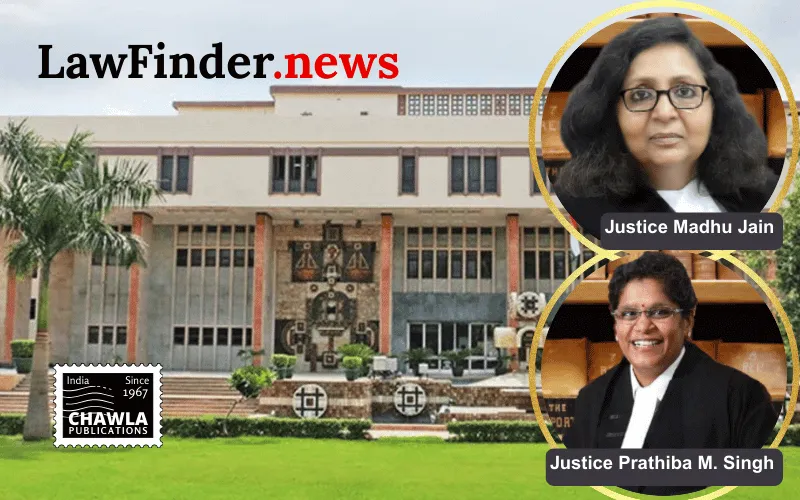
In a significant ruling, the Delhi High Court has upheld the acquittal of Vijay Tyagi and his family members in the dowry death case of Komal Tyagi, citing a lack of sufficient evidence and inconsistencies in the prosecution's case. The decision was delivered by a Division Bench comprising Justices Prathiba M. Singh and Madhu Jain.
The case revolved around the death of Komal Tyagi, who died under mysterious circumstances within seven years of her marriage to Vijay Tyagi. The prosecution alleged that Komal was subjected to continuous harassment and dowry demands, which ultimately led to her death. However, the court found that the prosecution failed to establish the essential ingredients required to presume a dowry death under Section 113B of the Indian Evidence Act.
The judgment highlighted several critical inconsistencies in the prosecution's case. Key among these was the testimony of family members, which contained contradictions and lacked coherence. The court observed that none of the family members attempted to stop the bleeding from Komal’s wrists or call the police immediately, actions that would be expected in such an emergency. Additionally, the medical evidence suggested that the injuries could not have been self-inflicted, as the cuts on both wrists were too severe for Komal to have inflicted them on herself.
The court further noted that the blade purportedly used in the incident was found placed over the pool of blood, which was inconsistent with the prosecution's suicide theory. The prosecution's failure to explain the presence of injuries on Komal's body that occurred 12-24 hours before her death also raised doubts about the case.
In their defense, the respondents maintained that the allegations were false and that the charges were an attempt by Komal’s family to cover up an honor killing. They pointed out that Komal had left her matrimonial home with all her jewelry, contradicting the claim that she was being harassed for dowry.
The court concluded that the prosecution did not provide cogent and reliable evidence to prove the allegations beyond a reasonable doubt. Consequently, the acquittal of Vijay Tyagi and his family members was upheld, with the court dismissing the appeal filed by the State.
Bottom Line:
Dowry death - Presumption under Section 113B of Indian Evidence Act requires foundational facts to be established - Mere unnatural death within seven years of marriage does not automatically constitute dowry death.
Statutory provision(s): Indian Penal Code, 1860 Sections 498A, 304B, 34; Indian Evidence Act, 1872 Sections 113A, 113B
State v. Vijay Tyagi, (Delhi)(DB) : Law Finder Doc id # 2865628