Execution of Discharge Vouchers by Insured Held to Constitute Accord and Satisfaction; Mere Financial Distress Insufficient to Vitiate Settlement
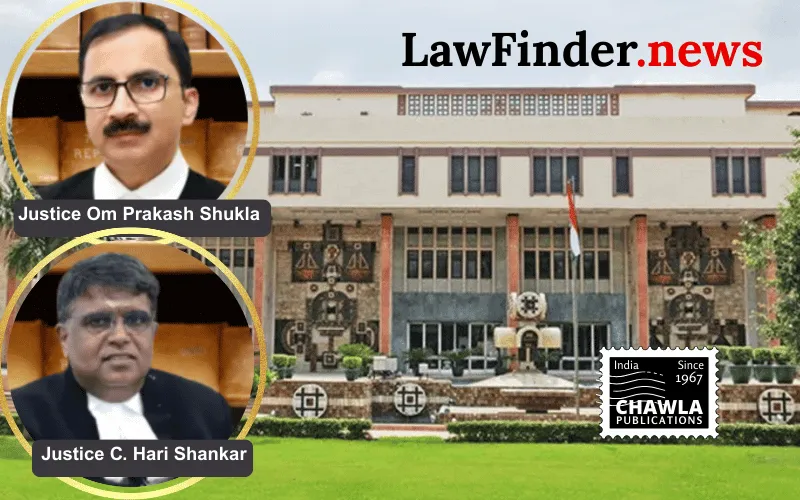
In a significant ruling on insurance claims and arbitration, the Delhi High Court has dismissed an appeal by Supermint Exports Pvt. Ltd. challenging an arbitral award that rejected its claim for a fire insurance loss beyond the amount assessed and paid by the insurer, New India Assurance Co. Ltd. The bench comprising Justices C. Hari Shankar and Om Prakash Shukla upheld the findings that the insured had executed two discharge vouchers acknowledging full and final settlement of the claim, thereby discharging the insurer’s liability through accord and satisfaction.
The case arose from a fire incident at the appellant’s premises in February 2013, where Supermint Exports suffered extensive damage to buildings, plant, machinery, and stocks. The insurance policy covered a sum of Rs. 32.25 crore. The appellant initially claimed over Rs. 27 crore, but after spot and final surveys by the insurer’s appointed surveyors, the loss was assessed at about Rs. 12.18 crore, which was paid by the insurer.
The appellant sought arbitration claiming entitlement to the balance amount. However, the insurer contended that the execution of discharge vouchers in March and July 2014, acknowledging receipt of Rs. 12.18 crore in full and final settlement, barred any further claims. The appellant argued that these vouchers were signed under financial duress due to severe economic distress, pressure from creditors, and downgraded credit facilities, thus vitiating their voluntariness.
The Arbitrator found no evidence that the insurer compelled the appellant to sign the vouchers or created a coercive situation. The appellant had accepted the surveyor’s assessment and did not object to the amounts before signing the vouchers. Furthermore, the appellant’s Board of Directors had consciously resolved to accept the settlement amount to avoid distress proceedings and pursue the balance amount later, but no such reservation was communicated to the insurer. The Arbitrator concluded that the discharge vouchers were voluntarily executed, constituting accord and satisfaction that discharged the contract and eliminated any arbitrable dispute.
The Single Judge of the Delhi High Court affirmed the arbitral award, emphasizing that the question of voluntariness and duress was a factual issue decided plausibly by the Arbitrator and did not warrant interference. The Court held that mere financial hardship or economic duress, not caused by the insurer’s actions, cannot vitiate a discharge voucher. The insurer’s request for discharge vouchers for record and audit purposes was not coercion. The appellant’s failure to protest the surveyor’s assessment or reservation about the settlement amount until after execution of the vouchers further supported the finding of no coercion.
On appeal, the Division Bench reiterated that under settled Supreme Court precedents, including National Insurance Co. Ltd. v. Boghara Polyfab Pvt. Ltd. and others, discharge vouchers executed without fraud, coercion, or undue influence constitute accord and satisfaction, barring further claims. The Court noted that economic duress as a ground to avoid accord and satisfaction requires linkage to the conduct of the opposite party. In commercial contracts between businessmen, escaping discharge on mere financial distress without evidence of coercion by the other party is difficult.
The Court distinguished cases where payment of even admitted amounts was withheld unless a discharge voucher was signed, which may amount to coercion. Here, the insurer had admitted and paid the assessed claim amount, and the appellant voluntarily signed the vouchers after ample time to object but chose not to. The Court held that the arbitrator’s decision was a plausible view based on evidence and did not suffer patent illegality or perversity warranting interference under Sections 34 or 37 of the Arbitration and Conciliation Act, 1996.
The appeal was accordingly dismissed, reaffirming the binding effect of discharge vouchers executed in full and final settlement in insurance claims and limiting arbitration to genuine unresolved disputes free from vitiating factors.
Bottom Line:
Insurance contract - Fire insurance claim - Execution of discharge vouchers by insured acknowledging full and final settlement - Accord and satisfaction - No arbitrable dispute remains - Insurer not responsible for financial duress due to delay in claim processing by surveyor - Arbitration clause not invoked as contract stood discharged - Arbitral award upheld.
Statutory provision(s): Arbitration and Conciliation Act, 1996 Sections 11, 34, 37; Indian Contract Act, 1872 Sections 15 (Coercion), 16 (Undue Influence), 17 (Fraud)
This judgment is a detailed exposition on the principles of accord and satisfaction in insurance contracts, emphasizing that discharge vouchers signed voluntarily by insured parties extinguish claims and disputes, barring arbitration, unless convincingly shown to be obtained by fraud, coercion or undue influence. Mere financial distress without coercion by the insurer does not suffice to invalidate such settlements.