Court Denies Condonation of 1504-Day Delay in Filing Appeal, Citing Lack of Satisfactory Explanation
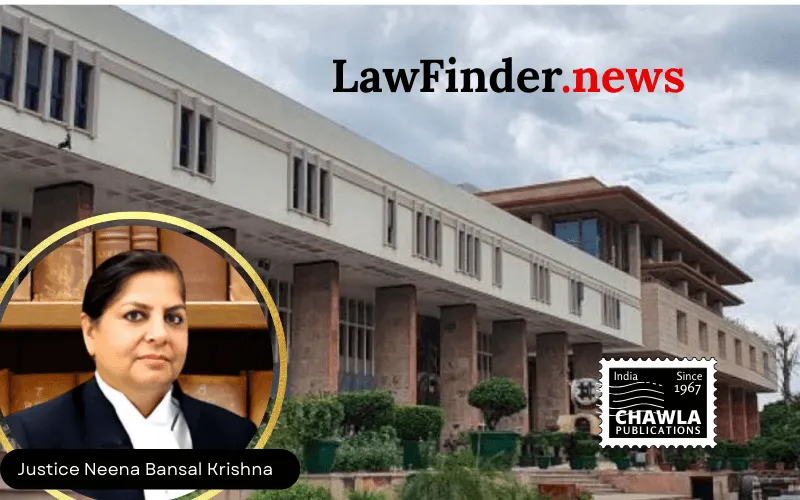
In a significant ruling, the Delhi High Court, presided over by Justice Neena Bansal Krishna, dismissed an appeal filed by Hira Devi, citing an unjustified delay of 1504 days in appealing a prior judgment. The case, involving a suit for possession and declaration against Pushpa Devi and others, highlighted the appellant's failure to provide satisfactory reasons for the extensive delay, despite her participation in related execution proceedings.
The initial suit, filed by Hira Devi, sought possession of a property in Kalkaji and a declaration that certain documents were forged. However, the trial court dismissed the suit in April 2017, finding that it was barred by limitation and that the plaintiff failed to prove possession or the non-execution of documents in favor of the defendants.
Subsequently, Hira Devi filed an appeal in September 2021, along with an application for condonation of delay under Order XLI Rule 3-A of the Civil Procedure Code, 1908. The grounds for condonation included financial hardship, health issues, and the Covid-19 pandemic. However, the lower court found these reasons insufficient, noting that Hira Devi actively participated in execution proceedings, indicating awareness of the judgment and decree.
The High Court concurred with the lower court, emphasizing that procedural rules of limitation are integral to justice and should not be disregarded without substantial cause. The court underscored that liberal approaches in condoning delays do not extend to cases of inaction or negligence, as highlighted by precedents such as Basawaraj v. Land Acquisition Officer and Esha Bhattacharjee v. Managing Committee of Raghunath Nafar Academy.
The judgment reaffirms the necessity for appellants to demonstrate due diligence and provide convincing explanations for delays. It also clarifies that participation in execution proceedings implies knowledge of court judgments, thereby nullifying claims of ignorance.
Ultimately, the Delhi High Court's decision underscores the importance of adhering to statutory timelines and the consequences of failing to do so, reinforcing the principle that justice is not served by perpetuating legally flawed decrees through procedural laxity.
Bottom Line:
An application for condonation of delay can only be allowed if the applicant provides a satisfactory explanation for the delay. Mere participation in execution proceedings does not excuse failure to file an appeal within the prescribed limitation period.
Statutory provision(s):
Civil Procedure Code, 1908 - Section 100, Order XLI Rule 3-A; Limitation Act, 1963 - Section 5
Hira Devi v. Pushpa Devi, (Delhi) : Law Finder Doc id # 2857118