Retrospective recovery from retired employees deemed inequitable; selective application of policy by FCI challenged.
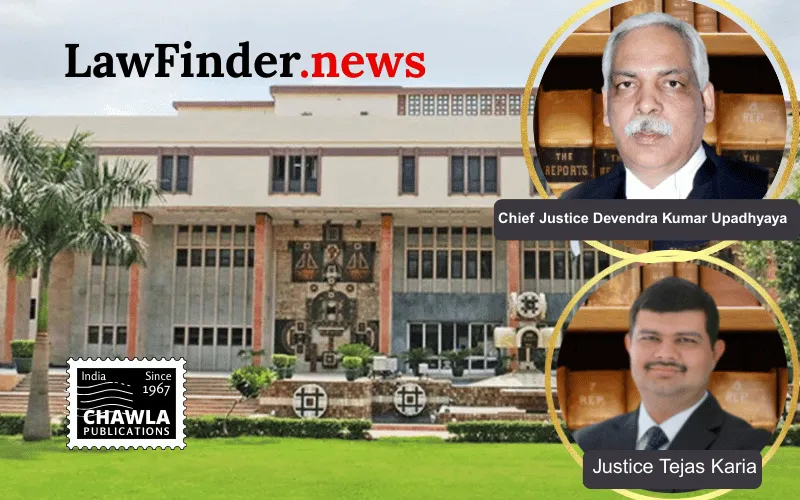
In a significant judgment dated June 4, 2026, the Delhi High Court's Division Bench, comprising Chief Justice Devendra Kumar Upadhyaya and Justice Tejas Karia, upheld the principles of fairness and non-discrimination in public sector enterprises by ruling against the arbitrary recovery of excess payments from retired employees of the Food Corporation of India (FCI). The court's decision stems from a series of appeals (LPA 357/2026, LPA 362/2026, and others) filed by the FCI challenging a previous judgment concerning the transition from the Central Dearness Allowance (CDA) to the Industrial Dearness Allowance (IDA) pay scales.
The controversy arose from FCI's attempt to retrospectively convert pay scales from CDA to IDA and recover alleged excess payments from retired employees, while simultaneously withholding payments due under the new system. The petitioners contended that such actions were inequitable, especially when no fraud or misrepresentation was involved on the part of the employees.
The High Court's judgment aligns with the Supreme Court's precedent in "State of Punjab v. Rafiq Masih (White Washer)," emphasizing that recovery of excess payments from retired employees is unjust, particularly after a significant lapse of time. The court further criticized the selective application of the policy by FCI, noting that benefits due to employees under the IDA pattern were unfairly withheld, despite the organization proceeding with recoveries where it benefitted.
The court directed the FCI to refund any recovered amounts with interest and to release withheld payments to the affected employees, reinforcing the need for public sector enterprises to act fairly and without discrimination. This decision underscores the judiciary's commitment to upholding constitutional principles of equality and non-arbitrariness in administrative actions.
Bottom line:-
Retrospective recovery of amounts from retired employees based on the transition from the CDA to IDA pattern of pay scales is impermissible, especially in the absence of fraud or misrepresentation by the employees. Withholding of payments due under such transitions is arbitrary and violates the principles of fairness and equality.
Statutory provision(s):
- Article 14 of the Constitution of India
- Article 16 of the Constitution of India