Court endorses monetary assistance over physical distribution, citing operational constraints and policy prudence.
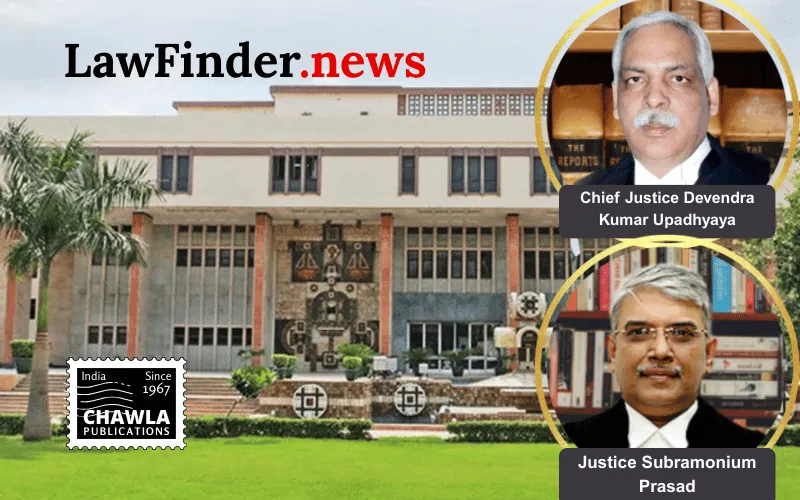
In a recent judgment, the Delhi High Court has upheld the Government of National Capital Territory of Delhi's (GNCTD) decision to provide monetary assistance for school uniforms through the Direct Benefit Transfer (DBT) mechanism, rather than distributing uniforms in kind. The decision was rendered by a bench comprising Chief Justice Devendra Kumar Upadhyaya and Justice Subramonium Prasad on January 23, 2026.
The case, brought forward by the petitioner, Justice For All, contested the GNCTD's policy shift from providing physical uniforms to disbursing funds directly to students. The petitioner argued that this change contravened previous court directives mandating the provision of uniforms in kind. However, the court found the GNCTD's policy to be within legal bounds, aligning with statutory provisions under the Right of Children to Free and Compulsory Education Act, 2009 (RTE Act) and the Delhi Right of Children to Free and Compulsory Education Rules, 2011.
The court's decision was grounded in the practical challenges associated with procuring and distributing uniforms, such as the diverse uniform requirements across schools and the logistical hurdles of measuring, tendering, and distributing uniforms in a timely manner. The judgment noted that the operational constraints justified the shift to a DBT system, which ensures that students receive assistance in a timely fashion, allowing them to purchase uniforms as needed.
Throughout the proceedings, the court reiterated the limited scope of judicial review concerning executive policy decisions. Citing precedents from the Supreme Court, the bench emphasized that courts should not interfere with policy decisions unless they are arbitrary, unreasonable, or violate statutory or constitutional provisions. The GNCTD's policy was deemed neither arbitrary nor contrary to statutory mandates, as the 2011 Rules do not explicitly require uniforms to be provided in kind.
The court also acknowledged the GNCTD's efforts in increasing the subsidy rates for uniforms, ensuring that students receive adequate financial support. The policy was supported by a comprehensive market study and a series of government approvals, highlighting the thoroughness of the decision-making process.
In conclusion, the court modified its previous order from April 2023 to align with the updated policy, directing the GNCTD to ensure timely disbursement of funds to eligible students. The judgment serves as a reminder of the judiciary's role in respecting the separation of powers while safeguarding the legality and fairness of governmental policies.
Bottom Line:
Judicial review of policy decisions - Courts should not interfere in policy decisions of the executive unless they are arbitrary, unreasonable, malafide, or contrary to statutory provisions or the Constitution.
Statutory provision(s): Right of Children to Free and Compulsory Education Act, 2009 (Sections 12, 2(n)), Delhi Right of Children to Free and Compulsory Education Rules, 2011 (Rule 11), Order 47, Rule 1 of the CPC.
Justice For All v. Govt. of NCT of Delhi, (Delhi)(DB) : Law Finder Doc Id # 2843014