Court Quashes University’s Orders; Upholds Autonomy and Constitutional Rights of JTA
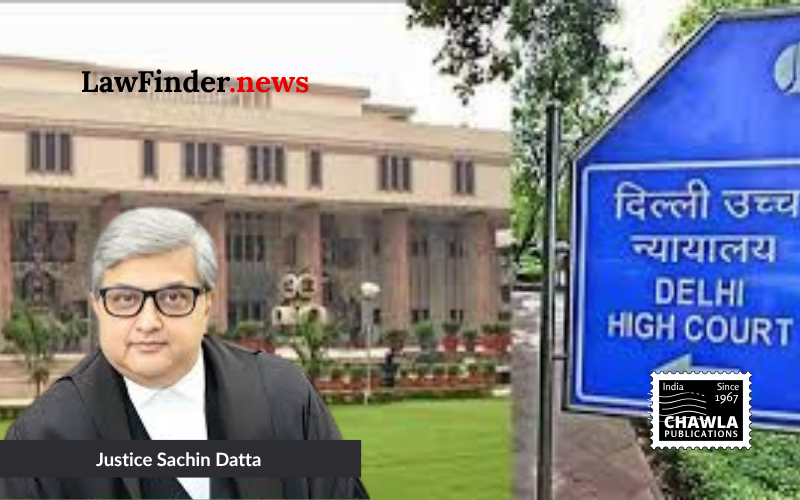
In a landmark judgment, the Delhi High Court, under the aegis of Justice Sachin Datta, delivered a significant verdict in favor of the Jamia Teachers Association (JTA) on October 28, 2025. The court quashed the orders issued by Jamia Millia Islamia University that attempted to dissolve the JTA and restrict its operations, underscoring the fundamental right to form and continue an association as protected under Article 19(1)(c) of the Indian Constitution.
The dispute arose when Jamia Millia Islamia University issued orders on November 17 and 18, 2022, dissolving the JTA, nullifying its scheduled elections, and restricting the association from using its premises and finances. This action was challenged by the JTA on the grounds that it violated their constitutional rights and the principles of natural justice.
The JTA, formed in 1967, operates as an autonomous body governed by its constitution, with an executive committee elected by its members. The University's intervention was perceived as an overreach, infringing upon the JTA's right to self-governance.
The court held that the University's actions did not satisfy the conditions laid down in Article 19(4), which allows reasonable restrictions on the right to association only in the interests of sovereignty, integrity, public order, or morality. The court noted that the impugned orders lacked a legitimate regulatory purpose and were purely administrative, not aligning with any exigency specified under Article 19(4).
Furthermore, the court highlighted the importance of the autonomy of associations, reiterating that any interference must adhere to constitutional guarantees and principles of natural justice. The unilateral formulation of a revised constitution for the JTA by the University was deemed impermissible, as it undermined the association's autonomy and violated their fundamental rights.
The court's decision draws heavily from precedents set in cases like "Damyanti Naranga v. Union of India" and "O.K. Ghosh v. E.X. Joseph," which emphasize the significance of continuing an association with its chosen governance, free from unwarranted external interference.
With this judgment, the Delhi High Court not only reinstates the dissolved JTA but also reinforces the protection of fundamental rights against arbitrary administrative actions, setting a crucial precedent for similar cases concerning the autonomy of associations within educational institutions.
Bottom Line:
The fundamental right to form and continue an association under Article 19(1)(c) of the Constitution of India cannot be overridden by administrative actions or unilateral decisions of statutory bodies without satisfying the conditions of Article 19(4).
Statutory provision(s): Article 19(1)(c), Article 19(4) of the Constitution of India, Jamia Millia Islamia Act, 1988 Sections 6(xxiv) and 23(j).
Jamia Teachers Association v. Jamia Millia Islamia, (Delhi) : Law Finder Doc Id # 2800072