Court Affirms Validity of Plaintiff's Claims for Partition and Coparcenary Rights in HUF Properties Despite Previous Settlement Decree
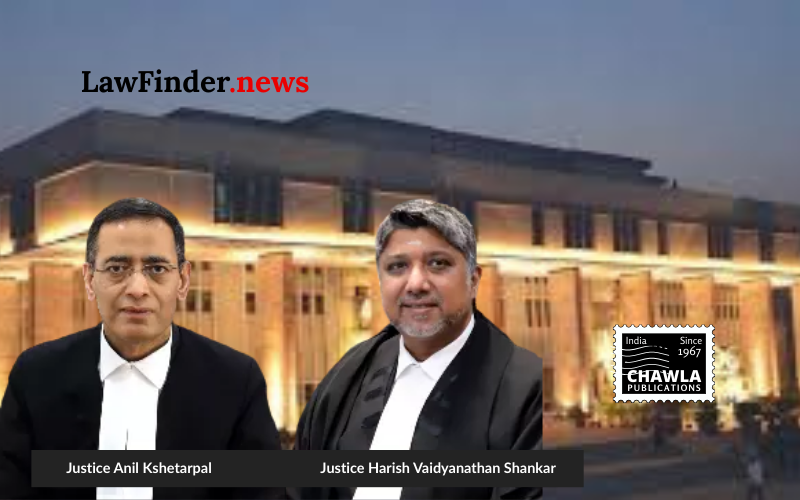
In a significant ruling, the Delhi High Court has dismissed an appeal by Sanjay Gupta, upholding the plaintiff, Sonakshi Gupta's right to pursue a suit for partition and coparcenary rights in the joint family properties of the L.R. Gupta HUF. The division bench, comprising Justices Anil Kshetarpal and Harish Vaidyanathan Shankar, confirmed the decision of the single judge, who had earlier rejected the appellant's application for dismissal of the suit under Order VII Rule 11 of the Code of Civil Procedure, 1908.
The case revolves around Sonakshi Gupta's claim to coparcenary rights in the HUF properties, asserting her entitlement under the amended Hindu Succession Act, 1956. The amendment, effective from September 9, 2005, accords daughters the same rights as sons in the coparcenary property. Sonakshi, who filed the suit within three years of reaching majority, argued that she was not bound by a 2006 compromise decree related to her family's previous settlement, as she was a minor at that time.
The appellants, including Sonakshi's uncle Sanjay Gupta, contended that the compromise decree from January 2006, which recorded the family’s separation since 1993, barred Sonakshi’s claims. They argued that her suit was an attempt to challenge the settled decree through successive litigation.
However, the court rejected these arguments, emphasizing that Sonakshi was not a party to the 2006 decree and thus not bound by it concerning her statutory rights as a coparcener. The court highlighted that the plaint clearly disclosed a cause of action, warranting a trial to ascertain the claims.
The judgment reinforces the applicability of the amended Hindu Succession Act, underscoring that prior settlements do not override statutory rights if the concerned party was not involved in the original decree. The court further clarified that the rejection of a plaint under Order VII Rule 11 is limited to specific grounds, and the existence of a cause of action, as articulated by Sonakshi, merits judicial examination through a trial.
Bottom Line:
Order 7 Rule 11 of the Code of Civil Procedure, 1908 - Rejection of a plaint at the threshold is permissible only if the plaint does not disclose a cause of action or is barred by law - Mere existence of a compromise decree or previous settlement does not automatically bar a suit if the plaintiff was not a party to such decree and specific rights under statutory amendments are asserted.
Statutory provision(s): Order 7 Rule 11 of the Code of Civil Procedure, 1908; Section 6 of the Hindu Succession Act, 1956 (Amendment of 2005).
Sanjay Gupta v. Sonakshi Gupta, (Delhi)(DB) : Law Finder Doc Id # 2819333