Court Affirms Decision to Reinstate Professor M.G. Hussain, Citing Procedural Irregularities in Disciplinary Proceedings
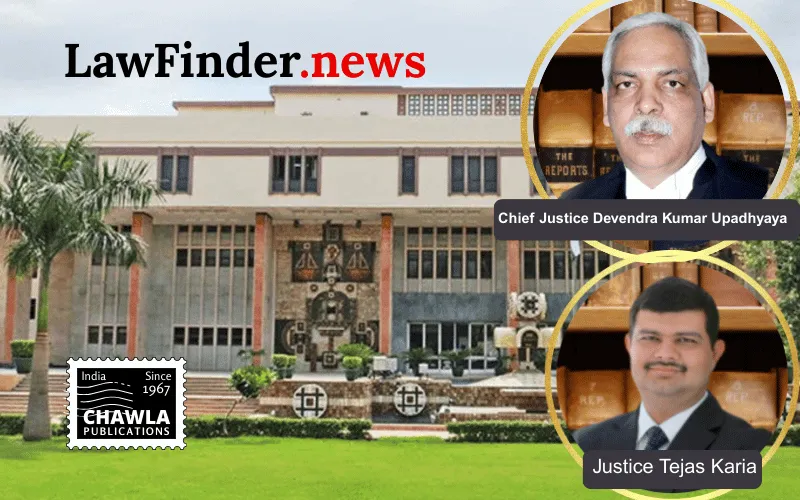
In a significant ruling, the Delhi High Court has upheld the decision to quash the compulsory retirement order against Professor M.G. Hussain of Jamia Millia Islamia, citing multiple procedural lapses in the disciplinary proceedings conducted by the university. The court's Division Bench, comprising Chief Justice Devendra Kumar Upadhyaya and Justice Tejas Karia, dismissed the appeal filed by Jamia Millia Islamia, affirming the earlier judgment by a single judge that declared the disciplinary actions against Professor Hussain as unlawful.
The controversy began when Professor Hussain, a distinguished faculty member of the Department of Psychology, was accused of financial misconduct and administrative lapses while serving in various capacities at the university. Following a suspension in 2011, a memorandum of charges was issued, leading to an inquiry that concluded with the professor's removal from service. Subsequently, the university's Executive Council modified this penalty to compulsory retirement.
In his defense, Professor Hussain maintained that the disciplinary proceedings were flawed, with the inquiry officer relying on unproven documents and disregarding testimonies of defense witnesses. The High Court, in its detailed judgment, emphasized the necessity for fairness and adherence to principles of natural justice in departmental inquiries. The court noted that the documents used to substantiate the charges were not backed by oral evidence, a fundamental requirement in quasi-judicial proceedings.
The court also criticized the inquiry officer for summarily dismissing the testimonies of defense witnesses without adequate discussion or rationale, and found the appellate authority's decision to modify the penalty as lacking in reasoning and analysis of evidence.
Furthermore, the High Court highlighted the prolonged delay and procedural deficiencies in the disciplinary process, deeming a remand for fresh inquiry as inappropriate and unfair. The bench referenced the Supreme Court's stance in similar cases, underscoring that remand is not obligatory where procedural flaws are evident, especially given the significant time elapsed and the respondent's superannuation.
This judgment reinforces the judiciary's commitment to ensuring procedural integrity in disciplinary proceedings and sets a precedent for institutions to adhere strictly to principles of fairness and justice in their inquiries.
Bottom line:-
Departmental inquiry proceedings must adhere to principles of fairness and natural justice, including proving the authenticity of documents and considering the testimonies of defense witnesses.
Statutory provision(s):
Article 226 of the Constitution of India
Jamia Millia Islamia v. M G Hussain, (Delhi)(DB) : Law Finder Doc id # 2915316