Court Declines to Interfere in SSC's Final Answer Key, Emphasizing Judicial Restraint in Academic Evaluations
In a significant judgment delivered on February 5, 2026, the Delhi High Court upheld the decisions of the Staff Selection Commission (SSC) regarding the Combined Graduate Level Examination (CGLE) 2024. The court dismissed a series of writ petitions challenging the SSC's final results and answer keys, emphasizing the limited scope of judicial review in academic matters.
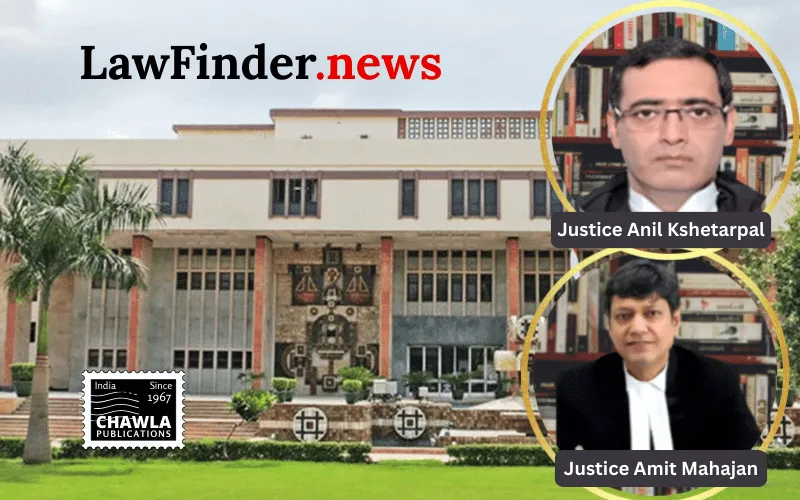
The bench, comprising Justices Anil Kshetarpal and Amit Mahajan, heard the petitions filed by Devyanshu Suryavanshi and others against the SSC. The petitioners contested the SSC's decision to award uniform marks for certain ambiguous questions and alleged procedural lapses in the evaluation process. However, the court ruled that judicial interference is only warranted in cases of patent illegality or manifest procedural impropriety.
The court acknowledged the concerns raised by the petitioners regarding specific questions where typographical errors were evident, but it emphasized that the SSC's approach, based on expert opinions, could not be substituted with judicial assessments. The judgment underscored the principle that academic matters, particularly those involving technical subjects, should largely be left to the discretion of Subject Matter Experts (SMEs).
The court also noted systemic lapses in the SSC's examination process, highlighting the need for the commission to adopt clearer and more transparent policies to mitigate ambiguities in future examinations. Despite expressing disapproval of the SSC's lapses, the court refrained from intervening, citing the corrective measures adopted by the SSC based on expert opinions.
This ruling reinforces the judiciary's stance on exercising restraint in academic evaluations, reminding candidates and institutions alike of the importance of expertise in academic assessments.
Bottom Line:
Judicial review in academic matters is strictly circumscribed and permissible only in rare and exceptional cases involving patent illegality, arbitrariness, or manifest procedural infirmity. Courts must defer to the opinions of Subject Matter Experts in technical or multi-disciplinary examinations unless the decision-making process is demonstrably flawed.
Statutory provision(s):
Articles 226 and 227 of the Constitution of India
Devyanshu Suryavanshi v. Staff Selection Commission, (Delhi)(DB) : Law Finder Doc id # 2849508