Court affirms the setting aside of arbitral award related to withdrawn claims, maintaining minimal judicial interference in arbitral processes.
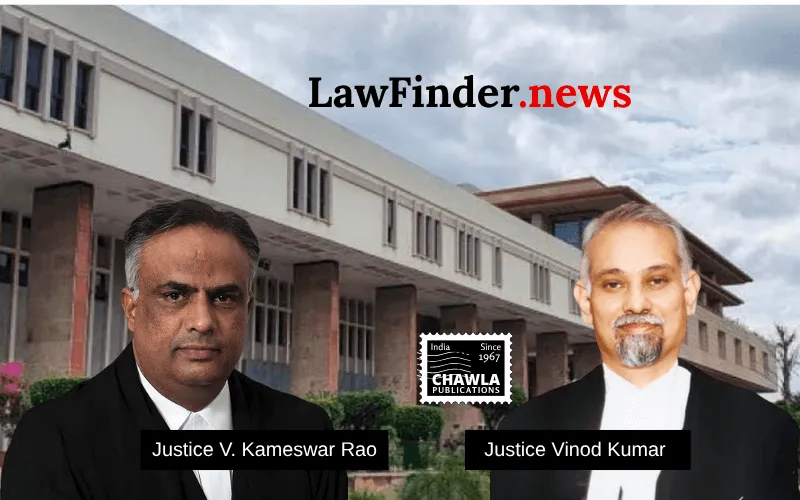
In a significant judgment, the Delhi High Court has dismissed an appeal filed by Parveen Kapoor and others against Omaxe Limited, upholding the decision of a Single Judge who had partially set aside an arbitral award involving a real estate dispute. The division bench, comprising Justices V. Kameswar Rao and Vinod Kumar, emphasized the importance of adhering to statutory provisions governing arbitration and the limitations of judicial review in such matters.
The case stemmed from a commercial real estate transaction where the appellants had invested in a unit in the Omaxe Novelty Mall, Amritsar, with an agreement for Assured Monthly Returns (AMR) until possession was offered. The appellants later withdrew their claim for AMR during arbitral proceedings, which led to the award being challenged.
The core issue revolved around the arbitrator's jurisdiction to adjudicate on claims that had been formally withdrawn. The Single Judge had previously found the arbitral award partly illegal as it included compensation based on the AMR claim that was no longer part of the reference. Consequently, the award of 10% interest per annum on AMR was also set aside, as it flowed from a withdrawn claim.
In the appeal, the appellants contended that the claim for AMR was reintroduced and adjudicated by the arbitrator. However, the High Court bench found that the claim, once withdrawn, could not be reintroduced in the arbitral proceedings. The court noted that the appellants had further pursued this claim before the National Company Law Tribunal (NCLT), affirming the withdrawal's finality.
The judgment underscores the principle of minimal judicial interference in arbitral awards, aligning with precedents that restrict court intervention to grounds expressly provided under the Arbitration and Conciliation Act, 1996. The court reiterated that arbitrators cannot adjudicate on matters beyond their jurisdiction, particularly when claims are withdrawn.
The decision is a reminder of the procedural rigor required in arbitration and the significance of the parties' adherence to agreed terms and statutory frameworks. It also reflects the judiciary's stance on ensuring that arbitral awards are not subject to re-appreciation of evidence or merit-based review unless clear legal grounds exist.
The dismissal of the appeal affirms the Single Judge's directive for handing over possession of the property, while maintaining the integrity of arbitration processes by not allowing withdrawn claims to influence the outcome.
Bottom line:-
Arbitration and Conciliation Act, 1996 - Arbitrator lacks jurisdiction to adjudicate on claims formally withdrawn by the claimant. A claim once withdrawn cannot be reintroduced in the arbitral proceedings, and any award based on such withdrawn claims is void and unsustainable.
Statutory provision(s): Arbitration and Conciliation Act, 1996 Sections 34, 37
Parveen Kapoor v. Omaxe Limited, (Delhi)(DB) : Law Finder Doc id # 2892806