University Cannot Expel Students for Participating in Peaceful Protests, Protecting Fundamental Rights
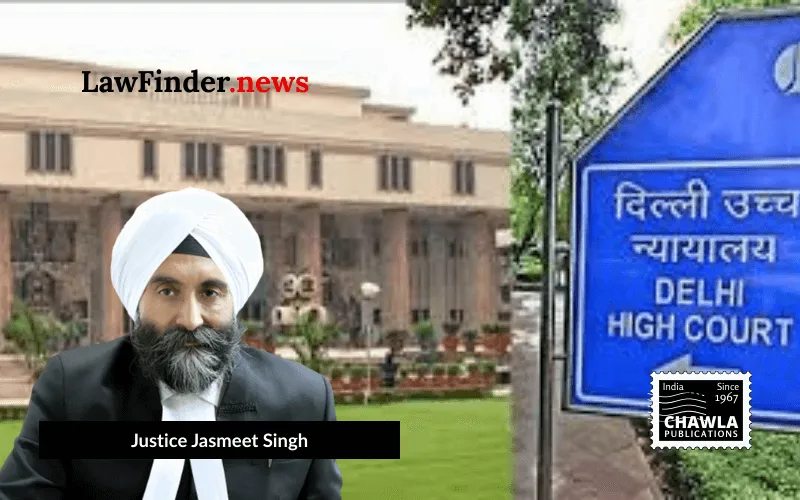
In a significant ruling, the Delhi High Court has reinforced the fundamental rights of students to peacefully protest, striking down the expulsion of a student from Dr. B.R. Ambedkar University Delhi. Justice Jasmeet Singh delivered the judgment on March 13, 2026, emphasizing the constitutional protections under Articles 19(1)(a) and 19(1)(b) which safeguard freedom of expression and the right to peaceful assembly.
The case involved Nadia, a student enrolled in the university, who faced expulsion following her alleged participation in a peaceful sit-down protest. The university's disciplinary action was challenged in court, where Nadia argued that her presence at the protest was not an act of defiance but a mere coincidence as she was visiting a friend.
Justice Singh highlighted that the university's decision to penalize Nadia for partaking in a peaceful protest was not tenable in law. The judgment underscored that universities, as instrumentalities of the State, must encourage independent thought and criticism rather than suppress dissent. Such suppression, the court noted, undermines the broader educational goals and the academic environment essential for holistic development.
Drawing on precedents from the Supreme Court, including the Ramlila Maidan Incident and Mazdoor Kisan Shakti Sangathan v. Union of India, the judgment reiterated the importance of the right to protest as a cornerstone of democracy. It stressed that peaceful protests are integral to fostering an informed citizenry and facilitating direct participation in public affairs.
The court also addressed the university's claim of Nadia violating a prior court order prohibiting her from participating in protests. Justice Singh clarified that any punishment for breaching court orders lies within the jurisdiction of the court itself, not the university. He expressed concern over the absence of allegations that the protest disrupted university functions or academic pursuits, thus deeming the expulsion highly disproportionate.
In concluding the judgment, Justice Singh allowed the petition, setting aside the expulsion order. He acknowledged the irreversible impact on Nadia’s academic career, directing the university to permit her to resume studies from the 3rd Semester in July 2026, treating the lost year as a consequence of the disciplinary action.
This judgment serves as a pivotal affirmation of students' rights, reinforcing the democratic ethos within educational institutions and safeguarding the fundamental freedoms of expression and assembly.
Bottom Line:
Right to peaceful protest and freedom of expression protected under Article 19(1)(a) and (b) of the Constitution - University cannot expel a student for participation in a peaceful protest, as it strikes at the spirit of democracy and fundamental rights.
Statutory provision(s): Article 19(1)(a), Article 19(1)(b), Article 21, Article 226 of the Constitution of India.
Nadia v. Dr. B.R. Ambedkar University Delhi, (Delhi) : Law Finder Doc id # 2871093