The Division Bench clarifies the status of 'workman' under the Industrial Disputes Act, ensuring protection for employees on probation.
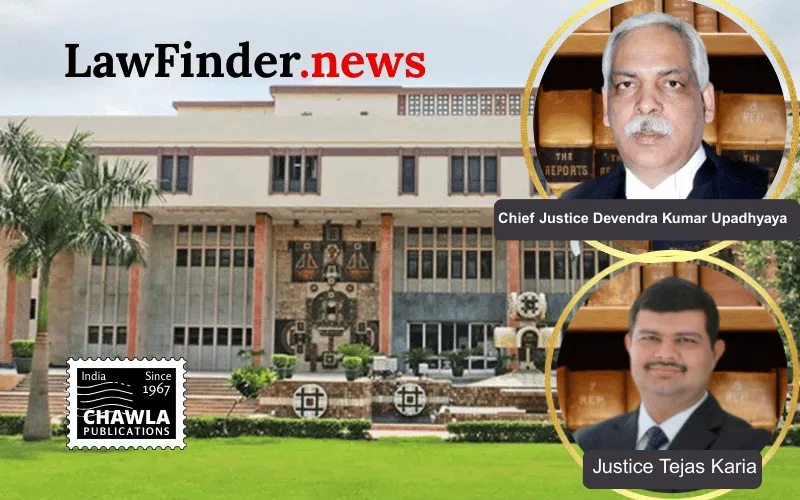
In a significant judgment, the Delhi High Court Division Bench comprising Chief Justice Devendra Kumar Upadhyaya and Justice Tejas Karia upheld the termination of Sarita Tiwari, a probationer at M/s Deccan Charters Pvt Ltd, while reinforcing her entitlement to wages during the pendency of legal proceedings under the Industrial Disputes Act, 1947. The case, a Letters Patent Appeal, challenged the decision of a Single Judge who previously set aside the award favoring Tiwari from the Central Government Industrial Tribunal.
The appellant, Sarita Tiwari, argued that her termination was punitive as it mentioned misbehavior and insubordination without a formal inquiry or finding of guilt, which she claimed constituted a stigmatic dismissal. The Division Bench, however, applying the precedent set by the Supreme Court in Pavanendra Narayan Verma v. Sanjay Gandhi PGI of Medical Sciences, concluded that the termination was simpliciter, not punitive, as it lacked a formal inquiry and a finding of misconduct.
The court also addressed the contentious issue of whether Tiwari, as a probationer, was a 'workman' under Section 2(s) of the Industrial Disputes Act. Contradicting the earlier Single Judge's ruling, the Division Bench referred to the Division Bench decision in Delhi Cantonment Board v. Central Government Industrial Tribunal, affirming that probationers are indeed considered 'workmen' and entitled to the protections accorded under the Act.
Moreover, the judgment reiterated the statutory entitlement under Section 17-B, which mandates that employees receive their last drawn wages during the pendency of proceedings, even if the termination order is eventually upheld. This entitlement is designed to mitigate the hardships employees face due to prolonged legal proceedings.
The court instructed that wages due under Section 17-B be paid to Tiwari, highlighting that any payments already made cannot be recovered by the employer, M/s Deccan Charters Pvt Ltd. This directive ensures that employees remain financially supported during lengthy judicial processes, reinforcing the protective nature of labor laws.
This judgment clarifies critical aspects of employment law, particularly regarding the rights of probationers and the obligations of employers during legal disputes, setting a precedent for similar cases in the future.
Bottom Line:
Service Law - Termination of services of a probationer - Determination of whether the termination was simpliciter or punitive in nature - No formal inquiry or finding of guilt held prior to termination - Termination order held to be simpliciter and not punitive.
Statutory provision(s):
- Industrial Disputes Act, 1947, Sections 2(s), 17B
Sarita Tiwari v. M/s Deccan Charters Pvt Ltd, (Delhi)(DB) : Law Finder Doc id # 2844634