Court Dismisses Petitions for Quashing Summoning Orders, Emphasizes Vicarious Liability of Directors under Negotiable Instruments Act
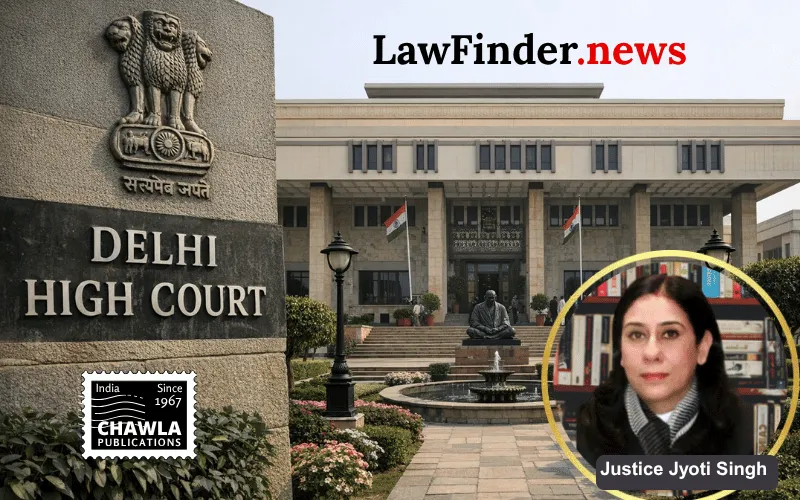
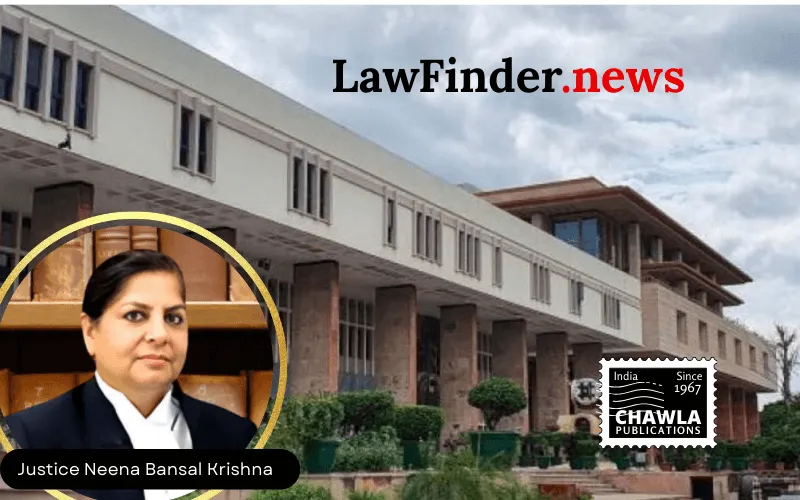
In a significant judgment, the Delhi High Court, presided over by Justice Neena Bansal Krishna, has dismissed the petitions filed by GBL Chemicals Limited and Ganesh Benzoplast Limited, seeking to quash the summoning orders issued against them in a cheque dishonour case. The case, centered around the dishonour of cheques amounting to over Rs. 15 Crores, highlights critical aspects of vicarious liability of directors and procedural conduct in criminal proceedings under the Negotiable Instruments Act, 1881.
The petitions were filed under Section 528 of the Bharatiya Nagarik Suraksha Sanhita, 2023, read with Section 482 of the Code of Criminal Procedure, 1973, challenging the summoning orders dated January 4, 2025, issued by the Judicial Magistrate, New Delhi. The case arises from complaints by M/s Progfin Private Limited, a Non-Banking Financial Company (NBFC), alleging that cheques issued by the petitioners were dishonoured due to "Drawer's Signature Differs" and "Funds Insufficient."
The petitioners contended that the cheques were issued under fraudulent circumstances orchestrated by their former CEO, Mr. Ramakant Pilani, who allegedly forged documents and siphoned off funds. They argued that the dishonour did not constitute an offence under Section 138 of the NI Act, as the signatures were unauthorized.
However, the court rejected these arguments, emphasizing the statutory presumption under Sections 118(a) and 139 of the NI Act, which favor the holder of a cheque. The court reiterated that the primary liability under Section 138 is on the 'Drawer' of the cheque, which, in this case, is the petitioner companies, irrespective of internal disputes or unauthorized signatures.
Justice Neena Bansal Krishna underscored that the directors, being in charge and responsible for the business conduct, could not escape liability merely due to the absence of specific allegations against them. The judgment drew upon several Supreme Court precedents, affirming that the essence of allegations in the complaint is more critical than their form.
The court also addressed the procedural aspect, criticizing the petitioners for engaging in "forum shopping" by simultaneously pursuing remedies in different courts without disclosing material facts. It upheld the principle that quashing proceedings at the pre-trial stage should not be used to stifle legitimate prosecutions.
The judgment marks a pivotal reaffirmation of the legal principles governing cheque dishonour cases, particularly concerning corporate and director liabilities. It sets a precedent for the treatment of similar disputes, emphasizing that defences related to fraudulent conduct and unauthorized signatures are triable issues, not suitable for adjudication at the summoning stage.
The petitions, CRL. M.C. NO. 2155/2025 and CRL. M.C. NO. 2156/2025, were consequently dismissed, with the court directing that the trial proceed to determine the merits of the case.
Bottom Line:
Dishonour of cheques under Section 138 of the Negotiable Instruments Act, 1881 - Vicarious liability of directors and corporate guarantors in cases involving dishonoured cheques - Prima facie case established for trial despite allegations of fraud and unauthorized signatures.
Statutory provision(s):
Negotiable Instruments Act, 1881 Sections 138, 141; Criminal Procedure Code, 1973 Section 482; Bharatiya Nagarik Suraksha Sanhita, 2023 Section 528
GBL Chemicals Limited v. State Of NCT Of Delhi, (Delhi) : Law Finder Doc id # 2845300