Court Allows Early Filing of Divorce by Mutual Consent for Couple Who Never Cohabited
In a significant ruling, the Delhi High Court has overturned a Family Court decision, allowing a couple to file for divorce by mutual consent before the statutory one-year period. The judgment in the case of Nupur Garg v. Dwarkesh Ahuja acknowledges exceptional hardship due to the marriage existing only in law and not in substance.
The marriage between Nupur Garg and Dwarkesh Ahuja was solemnized on March 30, 2025, but the couple never lived together or consummated their marriage. Following irreconcilable differences discovered immediately after the wedding, both parties opted for a mutual divorce within seven months of marriage. The Family Court initially dismissed their application under Section 14 of the Hindu Marriage Act, 1955, which sought to waive the one-year statutory waiting period required under Section 13-B(1) for divorce by mutual consent.
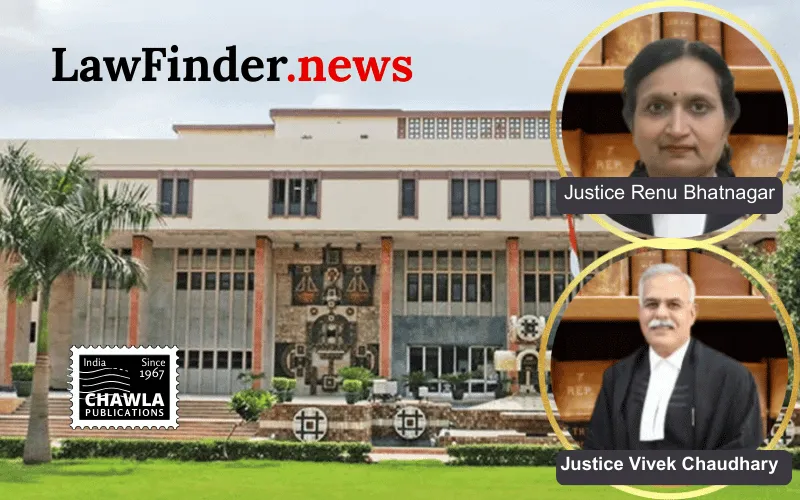
The High Court bench comprising Justices Vivek Chaudhary and Renu Bhatnagar noted the exceptional circumstances surrounding the case. The couple has been living separately since the marriage, with no reasonable probability of reconciliation. Nupur Garg is residing in India, caring for her aged parents, while Dwarkesh Ahuja remains in Canada. The court deemed these circumstances unavoidable and beyond the parties' control, leading to continued separation and exceptional hardship.
The judgment emphasized that insisting upon continuation of a marriage that exists only in law would cause undue hardship. It stated that mere registration of marriage cannot negate claims of hardship, as registration is a statutory requirement and does not reflect the viability of the marital relationship.
Drawing attention to a precedent set by the Full Bench in Shiksha Kumari v. Santosh Kumar, the court reiterated that the statutory period under Section 13-B(1) can be waived in cases of exceptional hardship. The judgment clarified that waiver should be granted only upon satisfying the court of circumstances that warrant such relief.
The Delhi High Court has allowed the couple to file their joint petition for divorce by mutual consent immediately, without waiting for the one-year period to expire. The matter has been remanded to the Family Court for expeditious proceedings in accordance with law.
This judgment underscores the judiciary's recognition of individual circumstances that may warrant deviation from statutory requirements, ensuring justice and relief in cases of genuine hardship.
Bottom Line:
Exceptional hardship under Section 14 of the Hindu Marriage Act, 1955 - Waiver of one-year statutory period for filing a joint petition for divorce by mutual consent under Section 13-B(1) HMA can be granted in cases of exceptional hardship when the marriage exists only in law and not in substance.
Statutory provision(s): Section 14, Section 13-B(1) of the Hindu Marriage Act, 1955; Section 19 of the Family Court Act, 1984
Nupur Garg v. Dwarkesh Ahuja, (Delhi)(DB) : Law Finder Doc id # 2844470