Supreme Court Reinstates Complaint in Cheque Dishonour Case, Clarifying Legal Stance on Multiple Instruments Top Court Sets Aside High Court's Decision, Emphasizing Separate Causes of Action in Cheque Dishonour Under Negotiable Instruments Act
In a significant judgment delivered on January 8, 2026, the Supreme Court of India overturned a Delhi High Court decision that had quashed a complaint related to cheque dishonour under Section 138 of the Negotiable Instruments Act, 1881. The case, Sumit Bansal v. M/s MGI Developers And Promoters, involved multiple cheques issued for the same transaction, leading to separate complaints filed by the complainant, Sumit Bansal.
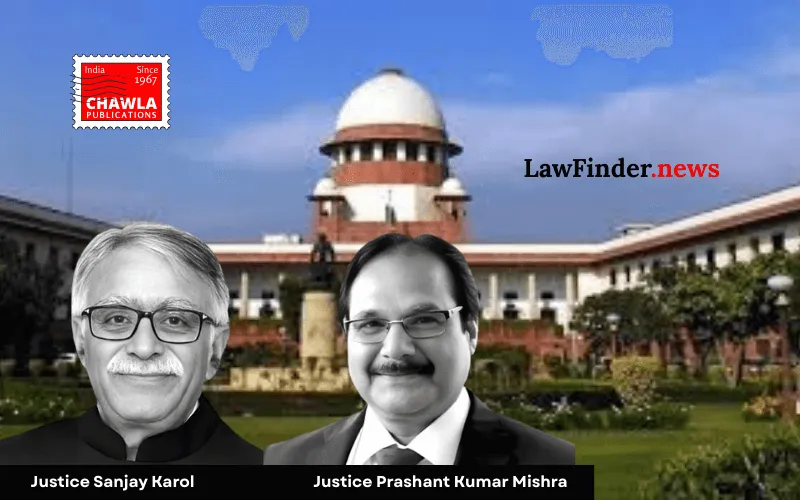
The Supreme Court bench, comprising Justices Sanjay Karol and Prashant Kumar Mishra, allowed the appeal filed by the complainant, thereby reinstating Complaint Case No. 3298 of 2019. This complaint was initially quashed by the High Court on the grounds that it represented the same underlying liability as another complaint (Complaint Case No. 2823 of 2019), thus constituting parallel prosecution.
The case revolves around an Agreement to Sell dated November 7, 2016, wherein M/s MGI Developers and Promoters and its proprietor, Manoj Goyal, failed to execute sale deeds for commercial units. As a result, they issued multiple cheques as a refund mechanism, which were subsequently dishonoured. This led to the filing of multiple complaints by the complainant under Section 138 of the NI Act.
The Supreme Court clarified that under the NI Act, each cheque dishonour represents a separate cause of action, provided there is distinct presentation, dishonour, and statutory notice. The Court emphasized that the High Court had overstepped its jurisdiction by quashing the complaint without considering the legal presumption in favour of the complainant.
The judgment also addressed the appeals filed by the respondents seeking to quash other complaints. The Supreme Court upheld the High Court's decision to allow these complaints to proceed to trial, reiterating that the presumption of liability under Section 139 of the NI Act places the burden of rebuttal on the accused.
The Supreme Court's decision underscores the importance of a trial to resolve factual disputes and the necessity to allow the legal process to unfold when statutory prerequisites of cheque dishonour are met.
Statutory provision(s): Section 138, Section 139, Section 141, Section 142 of the Negotiable Instruments Act, 1881, Section 482 of the Code of Criminal Procedure, 1973
Sumit Bansal v. M/s MGI Developers And Promoters, (SC) : Law Finder Doc Id # 2834831