Supreme Court Relieves Accused from Mandatory Court Appearances After Bail in Cheque Dishonour Case Apex Court Criticizes Haryana's Practice; Calls for Efficient Appeal Process Without Burdening Accused
In a landmark judgment on January 7, 2026, the Supreme Court of India addressed the contentious issue of mandatory court appearances for accused individuals granted bail in appellate proceedings. The case, Meenakshi v. State of Haryana, revolved around the conviction of the appellant, Meenakshi, in a cheque dishonour case, which had led to her bail being revoked and a non-bailable warrant being issued by the appellate court.
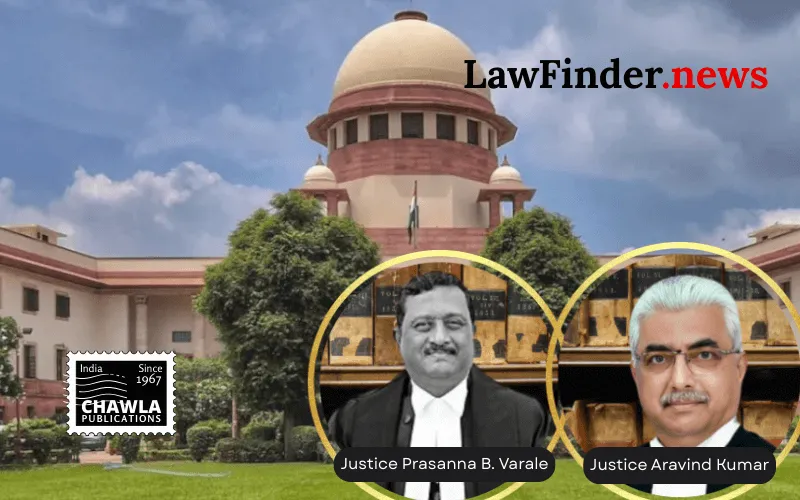
The Supreme Court, presided over by Justices Aravind Kumar and Prasanna B. Varale, criticized the prevalent practice in Haryana of requiring accused individuals to appear on every date of hearing in appellate courts even after their sentence has been suspended and bail granted. The Court described such a practice as "burdensome and unwarranted," emphasizing that it serves no purpose and could potentially delay the judicial process.
The appellant, Meenakshi, had been embroiled in legal battles following the dishonor of cheques amounting to over Rs. 12 lakhs, issued by her late mother. Despite being granted bail, the appellate court had insisted on her presence at every hearing, eventually leading to the cancellation of her bail due to her counsel's frequent changes and an alleged non-appearance.
The Supreme Court's judgment underscored the importance of focusing on the merits of the case rather than procedural formalities. It highlighted that appellate and revisional courts should either hear the appeal on its merits or allow the accused to make alternate arrangements if their counsel is unavailable. The Court also noted that the responsibility to ensure the presence of the accused, in case of dismissal of appeal or revision, lies with the jurisdictional magistrate.
This decision is seen as a significant step towards streamlining the judicial process and alleviating unnecessary burdens on accused individuals. The Court's directive is expected to influence similar practices in other states, promoting a more efficient and fair judicial system.
The Supreme Court ordered that the bail granted to Meenakshi will remain effective until the disposal of her appeal, which should be expedited within three months. The judgment has been forwarded to the Chief Justice of the Punjab and Haryana High Court for circulation among the district judiciary to ensure compliance and uniformity in practice.
Bottom Line:
Requirement for accused to appear on every date of hearing before Appellate or Revisional Court after suspension of sentence and grant of bail is burdensome and not warranted.
Statutory provision(s): Bharatiya Nagarik Suraksha Sanhita, 2023 Section 528, Code of Criminal Procedure, 1973 Section 482, Negotiable Instruments Act, 1881 Section 138
Meenakshi v. State of Haryana, (SC) : Law Finder Doc Id # 2840155