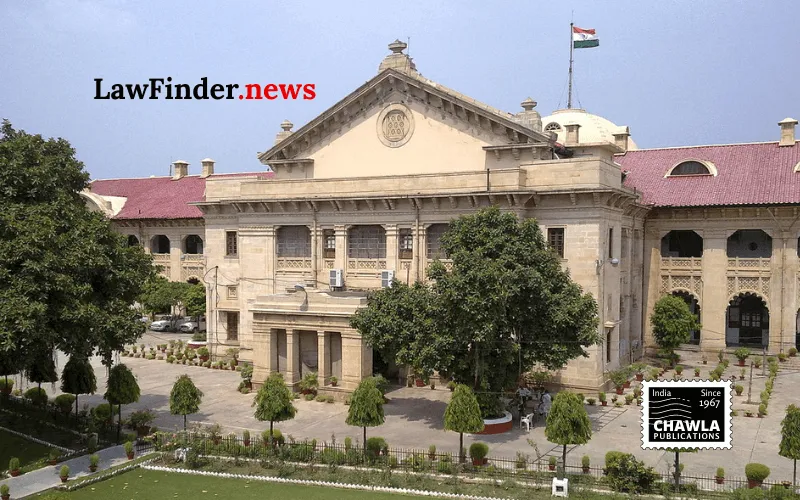
Mumbai, May 4 The Bombay High Court on Monday said district magistrates are competent to hear and decide adoption proceedings, upholding the 2021 amendment to the Juvenile Justice (Care and Protection of Children) Act and noting that the petitioners' contention is "completely unfounded".
The HC was hearing petitions filed by two couples challenging the amendment to the Act, which transferred the power to issue adoption orders from courts to district magistrates (executive officers).
The word "court" was replaced with the words "Collector" and "District Magistrate" (executive officers) in the amendment.
A bench of Justices Bharati Dangre and Manjusha Deshpande stated that it sees no difficulty in the district magistrate implementing the provisions of the law and determining the eligibility of the prospective adoptive parents.
"We have no doubt in our mind that the District Magistrate is well suited to act and assist in the welfare of the children, and the petitioners' assumption is wrong," the court said.
Under the provisions of the Juvenile Justice (Care and Protection of Children) Act and the regulations of the Central Adoption Resource Authority (CARA), any adoption process contemplates a valid order from the court, and this provision is now substituted by contemplating a valid order from the district magistrate.
The bench noted that the amendment was to ensure that the adoption process is expedited and there is no illegality.
The petitioners claimed that the grant of acceptance of a child in adoption was a judicial function that could not be delegated to an executive authority, like a district magistrate, who may not possess the necessary expertise.
They further said that a district magistrate, being an executive officer of a district, may also not be conversant with the niceties of law, and hence, by substituting the role played by the court in the adoption process, would have an adverse impact.
Additional Solicitor General Anil Singh, appearing for the government, argued that the delay in the process with the involvement of courts was one of the issues which warranted the substitution.
The high court order stated the petitioners' contention that a district magistrate would not be capable of hearing and deciding such matters is "completely unfounded".
It added that a district magistrate holds the position of the senior-most executive magistrate responsible for the general administration of the district, including maintaining law and order, enforcing government policies and coordinating various developmental activities.
"The apprehension expressed by the petitioners about the district magistrate not being competent to deal with the adoption process is dehors (devoid) any merit," the HC said.
The bench said it does not find any ground to believe that the district magistrate will not be in a position to exercise its role effectively.
It further noted that the amendment also states that appropriate training shall be imparted to district magistrates to equip them with the necessary knowledge.