Supreme Court Upholds Policy Shift in Ayurvedic Nursing Recruitment Legitimate Expectation Doctrine Inapplicable Amidst Policy Change and Increased Candidate Pool
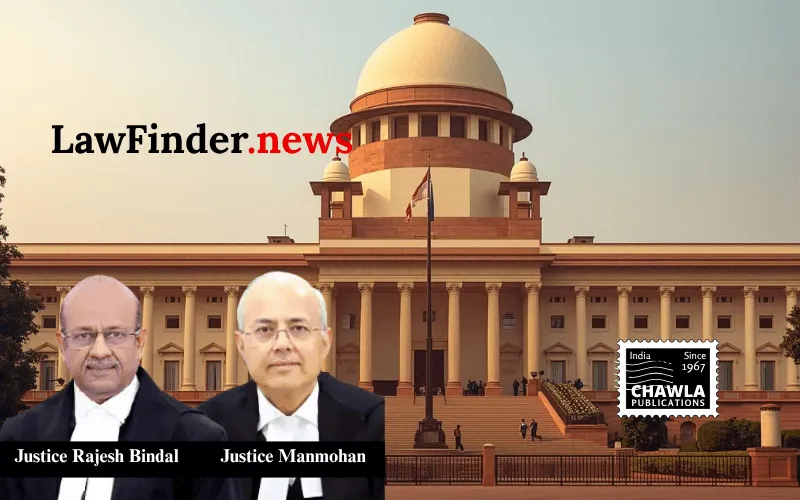
In a significant judgment dated January 8, 2026, the Supreme Court of India ruled in favor of the State of Uttar Pradesh, upholding a policy shift in the recruitment process for Ayurvedic Staff Nurses. The ruling, delivered by a bench comprising Justices Rajesh Bindal and Manmohan, addressed the appeals filed by the State challenging the High Court's decision, which had favored the respondents' claim to appointment based on the doctrine of legitimate expectation.
The case originated from a change in policy that occurred after private institutions were permitted to offer the Ayurvedic Nursing Training Course, leading to a substantial increase in the number of candidates. Previously, candidates who completed the course at the government institution were routinely appointed to government positions. However, the new policy required candidates to undergo a selection process conducted by the Uttar Pradesh Subordinate Services Selection Commission (UPSSSC), as per the statutory service rules notified in 2021.
The respondents, who had completed their training under the old regime, contended that they were entitled to appointments based on the longstanding practice of appointing graduates from the government institution. They argued that this practice created a legitimate expectation of appointment. However, the Supreme Court disagreed, stating that the doctrine of legitimate expectation could not be applied in this case due to the substantial change in policy and the increased number of candidates from private institutions.
The Court observed that the previous practice was feasible only when there were limited candidates and vacancies. With the introduction of private institutions, the number of qualified candidates increased significantly, necessitating a competitive selection process to ensure the appointment of the most qualified individuals. The Court found no evidence of arbitrariness or discrimination in the State's actions, noting that no candidates admitted after the 2010-11 session were directly appointed under the old system.
The judgment emphasized that the absence of a specific promise of appointment in the course advertisements and the subsequent notification of service rules rendered the respondents' claims unsustainable. It further clarified that the legitimate expectation must align with the principles of equality and non-arbitrariness under Article 14 of the Constitution, which were not violated in this case.
As a result, the Supreme Court set aside the High Court's judgment, thereby allowing the State's appeal and reinforcing the requirement for a structured selection process for government appointments in the Ayurvedic sector.
Bottom Line:
Doctrine of legitimate expectation - Cannot be applied when substantial change in policy occurs, particularly when the number of candidates increases manifold due to permission granted to private institutions.
Statutory provision(s): Doctrine of legitimate expectation, Article 14 of the Constitution, Uttar Pradesh Subordinate Services Selection Commission, Uttar Pradesh Ayush Department (Ayurved) Nursing Service Rules, 2021, United Provinces [Indian Medicines] Act, 1939.
State of Uttar Pradesh v. Bhawana Mishra, (SC) : Law Finder Doc Id # 2834520