Supreme Court cancels bail of husband in dowry death case, citing legal oversight In a significant ruling, the Supreme Court annuls bail granted by Allahabad High Court in a dowry death case, emphasizing the societal impact and statutory presumption under Indian Evidence Act.
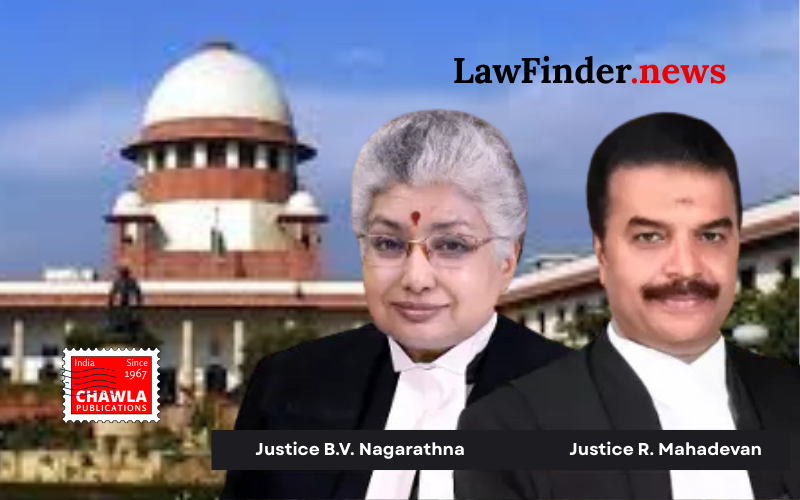
In a landmark judgment, the Supreme Court of India has set aside the bail granted to Raghvendra Singh alias Prince, accused in a dowry death case involving the suspicious demise of his wife, Aastha @ Saarika, within four months of their marriage. The bench, comprising Justices B.V. Nagarathna and R. Mahadevan, delivered the verdict on November 28, 2025, underscoring the imperative of strict judicial scrutiny in cases of dowry deaths.
The appeal was filed by Yogendra Pal Singh, the father of the deceased, challenging the decision of the Allahabad High Court, which had granted bail to the accused despite serious allegations and the statutory presumption under Section 113B of the Indian Evidence Act, 1872. The Supreme Court noted that the High Court failed to consider the gravity of the offence and the evidence available, including dying declarations and corroborative witness testimonies.
The case involved the tragic death of Aastha @ Saarika, who allegedly consumed aluminium phosphide poison under duress from persistent dowry demands, including a Fortuner car. The Supreme Court highlighted that dowry deaths not only constitute an individual offence but are also a societal crime, necessitating stringent judicial intervention.
The judgment emphasized the statutory framework under Sections 304B and 498A of the Indian Penal Code and Section 113B of the Evidence Act, which collectively aim to combat the social evil of dowry and protect married women from cruelty. The Court criticized the High Court for overlooking these provisions and relying solely on general bail principles.
In its detailed analysis, the Supreme Court reiterated the legislative intent behind the presumption of dowry death, which arises when a woman dies under abnormal circumstances within seven years of marriage and had been subjected to dowry-related cruelty. The onus then shifts to the accused to rebut this presumption.
The ruling serves as a stark reminder of the judiciary's role in upholding societal justice and the sanctity of marriage, emphasizing that judicial leniency in such cases could undermine public confidence in the legal system.
Statutory provision(s): Indian Penal Code, 1860 Sections 304B, 498A, 328; Dowry Prohibition Act, 1961 Sections 3 and 4; Indian Evidence Act, 1872 Section 113B; Criminal Procedure Code, 1973 Section 439(2).
Yogendra Pal Singh v. Raghvendra Singh Alias Prince, (SC) : Law Finder Doc Id # 2814109