Supreme Court Upholds Employee's Right to Back Wages, Restores Industrial Court's Decision, Apex Court Reinstates Back Wages for Terminated Employee, Reduces Interest Rate from 12% to 8% per Annum
In a landmark judgment, the Supreme Court of India reinstated the decision of the Industrial Court, ruling in favor of Balaji Madhukar Konkanwar, a former employee of the Maharashtra State Road Transport Corporation (MSRTC). The Apex Court restored the order granting back wages to Konkanwar from October 1993 to January 20, 2011, after the High Court had previously set aside this decision.
Konkanwar, who was initially appointed as a Cleaner on April 1, 1993, faced termination in May 1994. Despite an order from the Labour Commissioner for reinstatement and back wages, the MSRTC did not comply, leading to prolonged litigation. The Industrial Court had directed MSRTC to regularize Konkanwar’s services from the date he completed 180 days, but the Corporation delayed compliance until 2011.
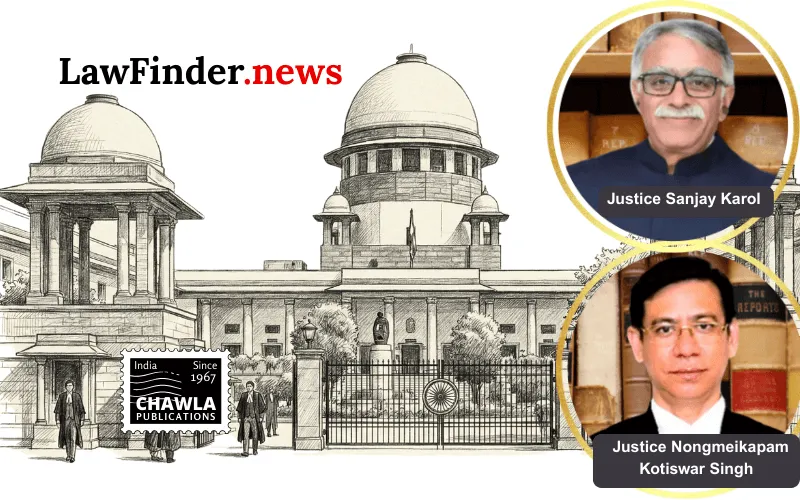
The Supreme Court, led by Justices Sanjay Karol and Nongmeikapam Kotiswar Singh, held that the doctrine of estoppel cannot prevent Konkanwar from receiving back wages, as his rights had been established by judicial orders. The court highlighted the abuse of unequal bargaining power by the employer, who imposed unreasonable conditions for regularization.
The decision underscores the importance of adhering to judicial orders and safeguarding employee rights against unjust employment practices. The Supreme Court also reduced the interest on back wages from 12% to 8% per annum, considering the financial implications on the employer, and awarded Rs. 1,00,000 as litigation costs to Konkanwar.
This ruling sets a precedent for similar cases, reinforcing the judiciary's role in upholding labor rights and addressing power imbalances between employers and employees.
Bottom Line:
Labour Law - Back wages and regularisation - Employee entitled to back wages from the date of completion of 180 days of service as ordered by the Industrial Court - High Court erred in setting aside such order.
Statutory provision(s): Labour Law, Doctrine of Estoppel, Costs