Supreme Court Restores Trial Court Order, Denies Examination of Minor Witness in Gujarat Suicide Case Apex Court Overturns High Court's Decision, Highlights Concerns Over Memory Distortion and Tutoring
In a significant ruling, the Supreme Court of India has set aside a Gujarat High Court order permitting the examination of a minor witness in a high-profile suicide case, thereby restoring the decision of the Trial Court. The case involves the alleged suicide of a woman in 2017, with accusations of mental and physical cruelty by her husband, Mayankkumar Natwarlal Kankana Patel, and others.
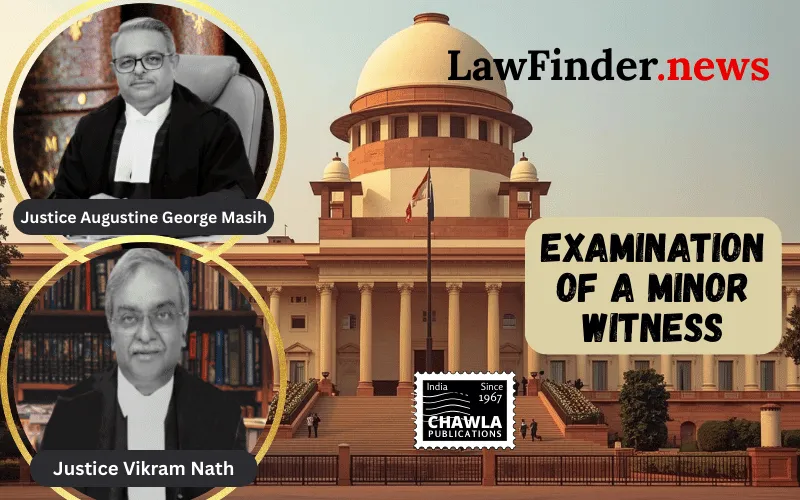
The Supreme Court's decision, delivered by Justices Vikram Nath and Augustine George Masih, focused on the indispensable nature of witness testimony and potential prejudice to the accused. The apex court found no substantial evidence that the minor child of the deceased was present during the incident. The court emphasized the child's tender age at the time of the incident and the lapse of over seven years, raising concerns about memory distortion and the possibility of tutoring.
The proceedings began when the complainant, the deceased's father, lodged an FIR against the accused, citing demands for dowry and alleging that such harassment led to his daughter's suicide. Despite the High Court's decision to allow the child's examination, the Supreme Court underscored the lack of material evidence proving the child's presence at the scene.
Advocates for the appellant argued that examining the minor at this stage would be prejudicial, given the child's young age during the incident and the prolonged separation from her father. The Supreme Court concurred, stating that allowing the child's testimony would unnecessarily prolong the trial without serving justice.
The Supreme Court's judgment underscores the necessity of careful deliberation over the competence and indispensability of witness testimony, especially when involving minors. This decision is expected to influence future cases concerning the examination of young witnesses and the safeguarding of accused rights.
Bottom Line:
Examination of a minor witness under Section 311 CrPC must meet the requirements of indispensability for arriving at the truth, and undue delay or potential prejudice to the accused must be avoided.
Statutory provision(s): Sections 311 of the Criminal Procedure Code, 1973; Section 118 of the Evidence Act, 1872; Sections 498A, 306, 323, 504, 506(2), 114 of the Indian Penal Code, 1860; Sections 3 and 7 of the Dowry Prohibition Act, 1961.
Mayankkumar Natwarlal Kankana Patel v. State of Gujarat, (SC) : Law Finder Doc Id # 2824368